
Teaching
Perjury
Swearing falsely: telling a lie under oath, or breaking a sworn promise. God's law forbids it, false witnesses brought about the deaths of Naboth and of Jesus, and Peter denied his Lord with an oath.
- Forbidden
- "Ye shall not swear by my name falsely" (Leviticus 19:12)
- Examples
- Against Naboth (1 Kings 21:8–13); against Jesus (Mark 14:56–57); against Stephen (Acts 6:13)
What God says
To swear falsely is to use God's name to cover a lie, so it profanes his name (Leviticus 19:12). The ninth commandment forbids false witness (Exodus 20:16), and the law said a man who lied under oath about a neighbour's goods had to repay in full, plus a fifth, and bring a guilt offering (Leviticus 6:2–5). Zechariah saw a flying scroll of curse entering the house of the one who swears falsely (Zechariah 5:4), and Malachi says God will be a swift witness against false swearers (Malachi 3:5).
In the Bible
Jezebel hired two worthless men to swear that Naboth had cursed God and the king, and he was stoned (1 Kings 21:8–13). At Jesus' trial many gave false evidence, though their stories did not agree (Mark 14:56–57). Peter, in fear, denied with an oath that he knew Jesus, then wept bitterly (Matthew 26:72–75).
For us
Jesus told his followers to be so truthful that a plain yes or no is enough (Matthew 5:33–37).
Key verses
- Exodus 20:16
Thou shalt not bear false witness against thy neighbour.
- Leviticus 19:12
And ye shall not swear by my name falsely, neither shalt thou profane the name of thy God: I am the Lord.
- Zechariah 5:4
I will bring it forth, saith the Lord of hosts, and it shall enter into the house of the thief, and into the house of him that sweareth falsely by my name: and it shall remain in the midst of his house, and shall consume it with the timber thereof and the stones thereof.
- Matthew 5:33–37
Again, ye have heard that it hath been said by them of old time, Thou shalt not forswear thyself, but shalt perform unto the Lord thine oaths: But I say unto you, Swear not at all; neither by heaven; for it is God’s throne: Nor by the earth; for it is his footstool: neither by Jerusalem; for it is the city of the great King. …
Read next
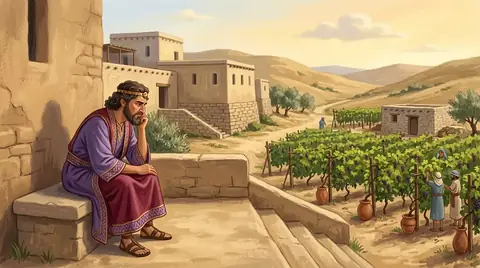 PersonNabothA man of Jezreel whose vineyard lay beside King Ahab's palace. He would not sell his family's land, so Jezebel had him…
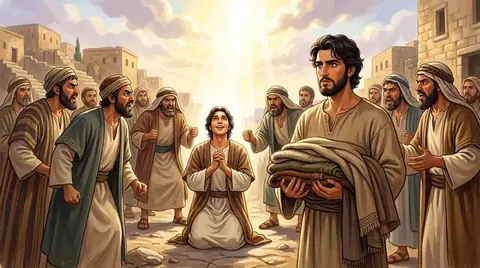 PersonStephenOne of the seven men chosen to care for the widows of the Jerusalem church. Full of faith and the Holy Spirit, he…
 PersonJezebelAhab's foreign queen, who brought Baal worship to Israel, killed the LORD's prophets and had Naboth stoned for his…
Written for this app in its own words, from the Bible, with the facts checked against Bible dictionaries and encyclopedias: Easton's, Smith's, Fausset's, ISBE, Holman, the New Bible Dictionary, Vine's and the Thompson Chain topics.
