
Thing
Mire
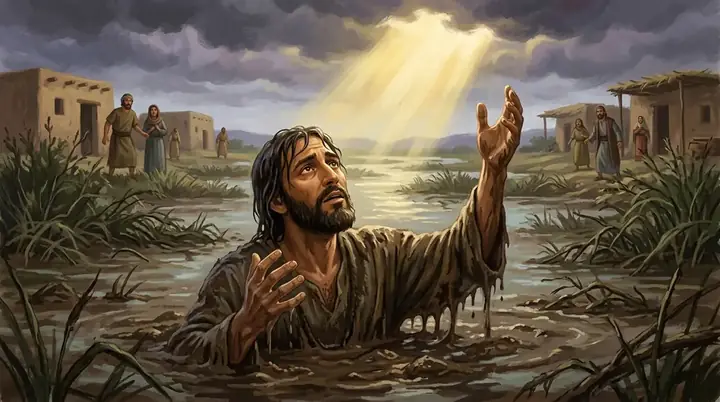
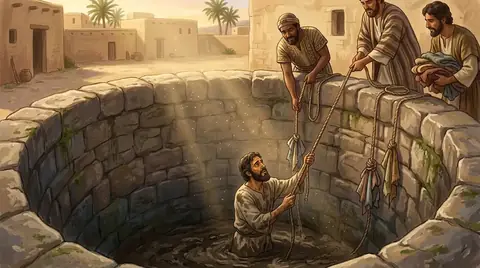
Deep mud. The psalms use sinking in the mire as a picture of overwhelming trouble, and being lifted out of it as God's rescue. Jeremiah was let down into a muddy cistern and sank in the mire.
- Psalm
- "He brought me up also out of an horrible pit, out of the miry clay" (Psalms 40:2)
What it was
Mire was the thick mud of a wet roadside or the bottom of a cistern. The princes of Judah let Jeremiah down by ropes into a cistern where "there was no water, but mire: so Jeremiah sunk in the mire", until Ebed-melech had him drawn up with old rags under his arms (Jeremiah 38:6–13).
What it meant
"I sink in deep mire, where there is no standing", cried the psalmist in his distress (Psalms 69:2). Then, "Deliver me out of the mire, and let me not sink" (Psalms 69:14). David remembered how God answered: "He brought me up also out of an horrible pit, out of the miry clay, and set my feet upon a rock, and established my goings. And he hath put a new song in my mouth" (Psalms 40:2–3). Peter uses the word another way: one who turns back to sin is like a washed sow returning to "her wallowing in the mire" (2 Peter 2:22).
Key verses
- Psalms 40:2–3
He brought me up also out of an horrible pit, out of the miry clay, and set my feet upon a rock, and established my goings. And he hath put a new song in my mouth, even praise unto our God: many shall see it, and fear, and shall trust in the Lord.
- Psalms 69:2
I sink in deep mire, where there is no standing: I am come into deep waters, where the floods overflow me.
- Psalms 69:14
Deliver me out of the mire, and let me not sink: let me be delivered from them that hate me, and out of the deep waters.
- Jeremiah 38:6
Then took they Jeremiah, and cast him into the dungeon of Malchiah the son of Hammelech, that was in the court of the prison: and they let down Jeremiah with cords. And in the dungeon there was no water, but mire: so Jeremiah sunk in the mire.
- 2 Peter 2:22
But it is happened unto them according to the true proverb, The dog is turned to his own vomit again; and the sow that was washed to her wallowing in the mire.
Read next
Written for this app in its own words, from the Bible, with the facts checked against Bible dictionaries and encyclopedias: Easton's, Smith's, Fausset's, ISBE, Holman, the New Bible Dictionary, Vine's and the Thompson Chain topics.
