
Saying
Mene
MEE-neeAramaic: "numbered"
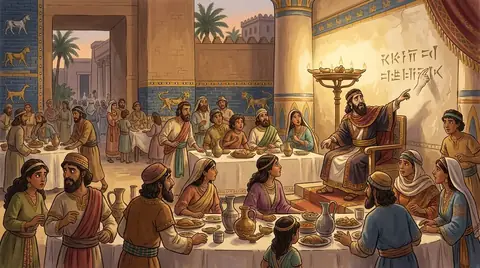
The first word of the writing on the wall at Belshazzar's feast, written twice: "MENE, MENE". Daniel read it as "God hath numbered thy kingdom, and finished it." Babylon fell that same night.
- Writing
- MENE, MENE, TEKEL, UPHARSIN (Daniel 5:25)
- Meaning
- Numbered, counted
While King Belshazzar feasted with a thousand of his lords and drank from the gold and silver vessels taken from God's temple, fingers of a man's hand appeared and wrote on the plaster of the palace wall. None of the king's wise men could read it. Daniel was brought in and read: "MENE, MENE, TEKEL, UPHARSIN." Then he explained the first word: "MENE; God hath numbered thy kingdom, and finished it" (Daniel 5:25–26). The days of the king's reign had been counted, and they were up. "In that night was Belshazzar the king of the Chaldeans slain", and Darius the Mede took the kingdom (Daniel 5:30–31). See also Tekel.
Key verses
- Daniel 5:25–26
And this is the writing that was written, MENE, MENE, TEKEL, UPHARSIN. This is the interpretation of the thing: MENE; God hath numbered thy kingdom, and finished it.
- Daniel 5:30–31
In that night was Belshazzar the king of the Chaldeans slain. And Darius the Median took the kingdom, being about threescore and two years old.
Read next
 PersonBelshazzarThe ruler of Babylon who drank from the temple's holy cups at a great feast and saw a hand write on the wall. Daniel…
 Person · ProphetDanielA young noble of Judah carried off to Babylon, who served four kings with wisdom and never bent his faith. God gave him…Word · AramaicTekel"Weighed": the second word of the writing on the wall at Belshazzar's feast. Daniel read it as God's verdict: the king…
Written for this app in its own words, from the Bible, with the facts checked against Bible dictionaries and encyclopedias: Easton's, Smith's, Fausset's, ISBE, Holman, the New Bible Dictionary, Vine's and the Thompson Chain topics.
