
Song
Magnificat
from the Latin of its first words, "My soul doth magnify"
Mary's song of praise when she visited Elizabeth, after the angel told her she would bear the Son of God. It praises God who lifts up the lowly and keeps his promise to Abraham.
- Where
- Luke 1:46–55
- Like
- Hannah's song (1 Samuel 2:1–10)
The song
When Mary came to her cousin Elizabeth, the unborn John leapt for joy, and Elizabeth called her blessed. Mary answered with a song: "My soul doth magnify the Lord, and my spirit hath rejoiced in God my Saviour. For he hath regarded the low estate of his handmaiden" (Luke 1:46–48). Its name comes from its first word in Latin, magnificat, "magnifies".
What it says
Mary praises God for what he has done for her, a humble girl of Nazareth, and then for what he does for all: his mercy on those who fear him, his strength against the proud, putting down the mighty and exalting the humble, filling the hungry and sending the rich away empty (Luke 1:49–53). It echoes Hannah's song when Samuel was born (1 Samuel 2:1–10) and many psalms. It ends with God keeping his word "to Abraham, and to his seed for ever" (Luke 1:55). Mary saw her child as the fulfilment of all God's promises. The church has sung her song ever since.
Key verses
- Luke 1:46–55
And Mary said, My soul doth magnify the Lord, And my spirit hath rejoiced in God my Saviour. For he hath regarded the low estate of his handmaiden: for, behold, from henceforth all generations shall call me blessed. …
- 1 Samuel 2:1–10
And Hannah prayed, and said, My heart rejoiceth in the Lord, mine horn is exalted in the Lord: my mouth is enlarged over mine enemies; because I rejoice in thy salvation. There is none holy as the Lord: for there is none beside thee: neither is there any rock like our God. Talk no more so exceeding proudly; let not arrogancy come out of your mouth: for the Lord is a God of knowledge, and by him actions are weighed. …
Read next
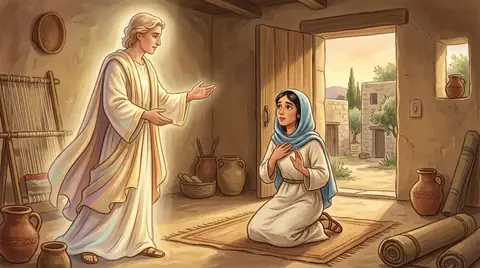 PersonMaryThe young woman of Nazareth chosen to be the mother of Jesus. She believed the angel's word, bore God's Son, and stood…
 PersonElizabethThe elderly wife of the priest Zechariah and mother of John the Baptist. When Mary visited her, the unborn John leapt…
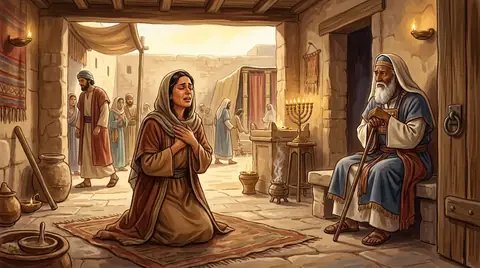 PersonHannahThe childless wife of Elkanah who prayed for a son at Shiloh, promised him to God, and became the mother of the prophet…
Written for this app in its own words, from the Bible, with the facts checked against Bible dictionaries and encyclopedias: Easton's, Smith's, Fausset's, ISBE, Holman, the New Bible Dictionary, Vine's and the Thompson Chain topics.
