
Thing · Precious stone
Ligure
LIG-yoor
The first stone in the third row of the high priest's breastplate, engraved with a tribe's name. Which stone it was isn't certain; many take it to be the jacinth or the amber-coloured zircon.
- Where
- Exodus 28:19; Exodus 39:12
- Perhaps
- Jacinth (orange zircon) or opal
What it was
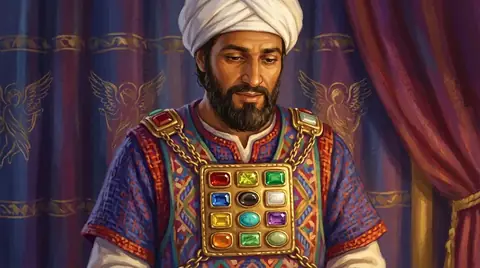
The Hebrew word is leshem, and it comes up only in the two lists of the twelve stones on the breastplate of Aaron (Exodus 28:19; Exodus 39:12). Each stone carried the name of one tribe of Israel, so that the high priest bore all the people over his heart whenever he went before God. The ligure began the third row, next to the agate and the amethyst.
No stone is called a ligure today, so we can only guess at its colour. The old Greek translation made it a jacinth, a clear reddish-orange stone, and many have followed that; others have suggested the opal. Whatever it was, it was precious enough to sit among sapphires and emeralds.
Key verses
- Exodus 28:17–21
And thou shalt set in it settings of stones, even four rows of stones: the first row shall be a sardius, a topaz, and a carbuncle: this shall be the first row. And the second row shall be an emerald, a sapphire, and a diamond. And the third row a ligure, an agate, and an amethyst. …
- Exodus 39:12
And the third row, a ligure, an agate, and an amethyst.
Read next
 ThingBreastplateArmour that covered a soldier's chest, and the KJV's name for the high priest's jewelled breastpiece. Paul tells…
 PersonAaronMoses' older brother and Israel's first high priest. He spoke for Moses before Pharaoh and served God at the tabernacle…Thing · StoneAgateA banded, semi-precious kind of quartz. One agate was set in the high priest's breastplate, and Isaiah promises windows…Material · GemAmethystA purple or violet quartz, the last stone of the third row in the high priest's breastplate, and the twelfth foundation…
Written for this app in its own words, from the Bible, with the facts checked against Bible dictionaries and encyclopedias: Easton's, Smith's, Fausset's, ISBE, Holman, the New Bible Dictionary, Vine's and the Thompson Chain topics.
