
Teaching · Law
Legislation
The making of laws. God's law for Israel gave the same rule to the native-born and the stranger, forbidding laws for one class only, and new cases were brought to God for a ruling.
- One law for all
- Exodus 12:49; Leviticus 24:22; Numbers 15:15
- New cases
- The Sabbath-breaker; Zelophehad's daughters (Numbers 15:32–35; Numbers 27:1–11)
One law for all
Again and again God's law said there was to be one rule for everyone: "One law shall be to him that is homeborn, and unto the stranger that sojourneth among you" (Exodus 12:49). The same was said of the Passover, the offerings and the penalties for crimes (Numbers 9:14; Numbers 15:15–16; Leviticus 24:22). Rich and poor, Israelite and foreigner, stood equal before it. In Christ the same is true in a deeper way: "there is neither Jew nor Greek... for ye are all one in Christ Jesus" (Galatians 3:28).
New cases
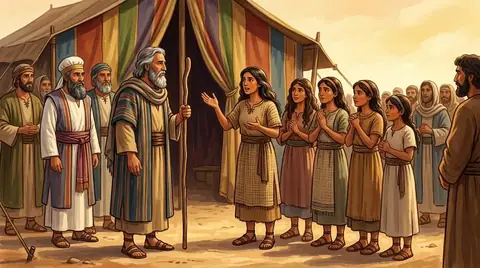
When something arose that the law had not yet settled, Moses brought it to the LORD. A man found gathering sticks on the Sabbath was held until God gave judgment (Numbers 15:32–35). The five daughters of Zelophehad, whose father had no sons, asked for his land; God said they were right, and gave a law of inheritance for all such families (Numbers 27:1–11). Israel's laws came from God, not from the will of its rulers.
Key verses
- Exodus 12:49
One law shall be to him that is homeborn, and unto the stranger that sojourneth among you.
- Numbers 15:15–16
One ordinance shall be both for you of the congregation, and also for the stranger that sojourneth with you, an ordinance for ever in your generations: as ye are, so shall the stranger be before the Lord. One law and one manner shall be for you, and for the stranger that sojourneth with you.
- Numbers 27:6–8
And the Lord spake unto Moses, saying, The daughters of Zelophehad speak right: thou shalt surely give them a possession of an inheritance among their father’s brethren; and thou shalt cause the inheritance of their father to pass unto them. And thou shalt speak unto the children of Israel, saying, If a man die, and have no son, then ye shall cause his inheritance to pass unto his daughter.
- Galatians 3:28
There is neither Jew nor Greek, there is neither bond nor free, there is neither male nor female: for ye are all one in Christ Jesus.
Read next

Written for this app in its own words, from the Bible, with the facts checked against Bible dictionaries and encyclopedias: Easton's, Smith's, Fausset's, ISBE, Holman, the New Bible Dictionary, Vine's and the Thompson Chain topics.
