
Symbol · Thing
Keys
In the Bible a key stands for authority: the right to open and shut, to admit or to bar. Christ holds the keys of death, and Peter was given the keys of heaven's kingdom.
- Hebrew
- Maphteach, "the opener"
- Greek
- Kleis, from the word for shutting
- Held by
- Eliakim (Isaiah 22:22), Peter (Matthew 16:19), Christ (Revelation 1:18; 3:7), an angel (Revelation 20:1)
What it was
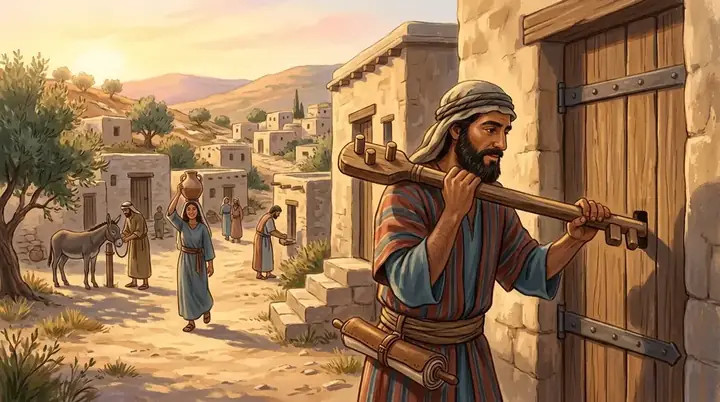
Ancient keys were nothing like ours. A door was shut by a wooden bolt inside, held in place by little pins that dropped into it. The key was a long wooden bar with pegs on the end, put in through a hole in the door to push the pins up and free the bolt. Keys were often so big that they were carried on the shoulder, which is the picture in Isaiah 22:22. The servants of Eglon waited outside his locked chamber until they took a key and opened it, and found their king dead (Judges 3:25).
What it means
Because the man with the key decided who came in, a key became a sign of office. God gave Eliakim "the key of the house of David": he was to run the king's palace, and "he shall open, and none shall shut" (Isaiah 22:22). Revelation gives that very key to Christ (Revelation 3:7). He opens the door to God's kingdom and no one can close it, and what he shuts stays shut. He also holds "the keys of hell and of death" (Revelation 1:18): the grave cannot keep anyone he chooses to release, for he was dead and is alive for evermore.
When Peter confessed that Jesus was the Christ, Jesus promised him "the keys of the kingdom of heaven" (Matthew 16:19). In the traditional view Peter used them when he opened the door of the gospel to the Jews at Pentecost and to the Gentiles at the house of Cornelius (Acts 2; Acts 10). The same power to bind and loose was given to all the apostles (Matthew 18:18): the church, by preaching the gospel, declares who is forgiven and who is not. Jesus accused the lawyers of taking away "the key of knowledge": they would not enter God's kingdom themselves and barred the way to others (Luke 11:52).
Key verses
- Isaiah 22:22
And the key of the house of David will I lay upon his shoulder; so he shall open, and none shall shut; and he shall shut, and none shall open.
- Matthew 16:19
And I will give unto thee the keys of the kingdom of heaven: and whatsoever thou shalt bind on earth shall be bound in heaven: and whatsoever thou shalt loose on earth shall be loosed in heaven.
- Luke 11:52
Woe unto you, lawyers! for ye have taken away the key of knowledge: ye entered not in yourselves, and them that were entering in ye hindered.
- Revelation 1:18
I am he that liveth, and was dead; and, behold, I am alive for evermore, Amen; and have the keys of hell and of death.
- Revelation 3:7
And to the angel of the church in Philadelphia write; These things saith he that is holy, he that is true, he that hath the key of David, he that openeth, and no man shutteth; and shutteth, and no man openeth;
Read next
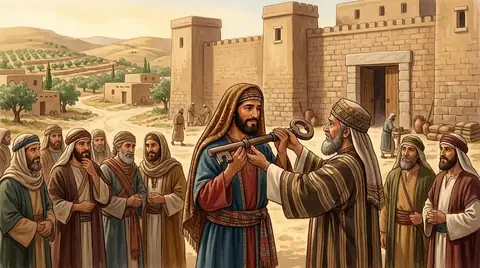 PersonEliakimHezekiah's palace steward, who faced the Assyrian envoys outside Jerusalem and whom Isaiah promised the key of David's…
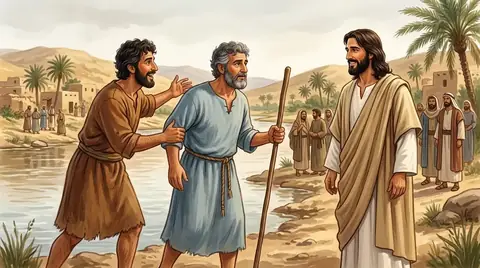 PersonPeterA Galilean fisherman who became the leader of the twelve apostles. Bold and impulsive, he confessed Jesus as the…
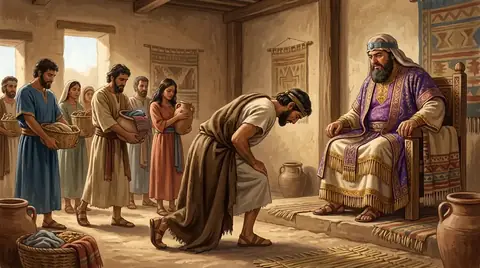 Place · TownEglonA Canaanite town in the lowlands near Lachish whose king joined the attack on Gibeon and was hanged by Joshua. It is…
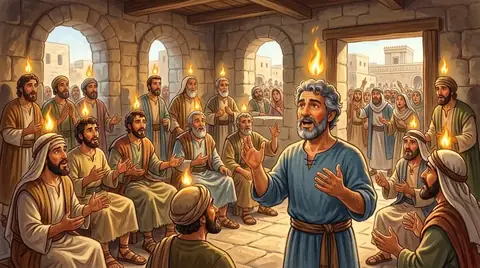 FeastPentecost (the Feast of Weeks)The harvest feast kept fifty days after Passover, when two loaves baked from the new wheat were offered to God. On the…
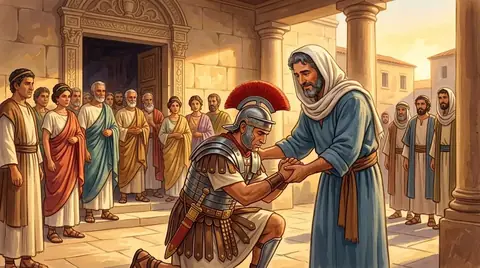 PersonCorneliusA Roman centurion at Caesarea, a God-fearing man, to whom Peter was sent by a vision. His household were the first…
Written for this app in its own words, from the Bible, with the facts checked against Bible dictionaries and encyclopedias: Easton's, Smith's, Fausset's, ISBE, Holman, the New Bible Dictionary, Vine's and the Thompson Chain topics.
