
Thing · Law
Judgment seat
Greek bēma, a raised platform
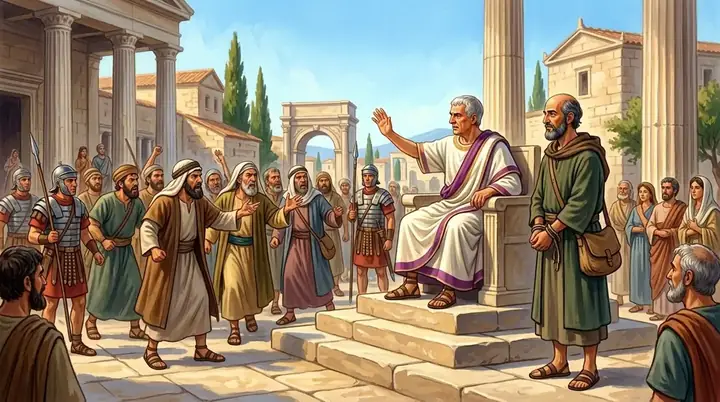
The raised platform where a Roman governor sat to hear cases and give his verdict. Pilate sat on one to try Jesus; Paul says every Christian will stand before Christ's.
- Where
- Pilate's in Jerusalem (Matthew 27:19), Gallio's at Corinth (Acts 18:12), Festus's at Caesarea (Acts 25:6)
- Greek
- Bēma, a step or platform; also used for the stand where athletes were given their prizes
What it was
A bēma was a stone or wooden platform, reached by steps, set up in a public place or a courtyard. The magistrate sat on it so that all could see and hear him, and from there he gave judgment. Pilate was sitting on his when his wife sent word to have nothing to do with "that just man" (Matthew 27:19). Its pavement outside the governor's palace was called Gabbatha. The stone bēma of Gallio can still be seen in the ruins of Corinth's market place, where the Jews dragged Paul before him and Gallio threw the case out (Acts 18:12–17). At Caesarea Paul stood before the judgment seat of Festus and appealed to Caesar (Acts 25:10–11).
What it means
Paul used the picture for the day when Christians give account to their Lord: "we must all appear before the judgment seat of Christ", to receive what we have done in the body, good or bad (2 Corinthians 5:10; Romans 14:10). This is not a trial to decide whether a believer is saved; that was settled at the cross. It is where a life of service is weighed and rewarded, and the same word was used of the stand from which prizes were given at the games. It should make us careful how we build (1 Corinthians 3:12–15) and slow to judge one another (Romans 14:10–13).
Key verses
- Matthew 27:19
When he was set down on the judgment seat, his wife sent unto him, saying, Have thou nothing to do with that just man: for I have suffered many things this day in a dream because of him.
- Acts 18:12
And when Gallio was the deputy of Achaia, the Jews made insurrection with one accord against Paul, and brought him to the judgment seat,
- Romans 14:10
But why dost thou judge thy brother? or why dost thou set at nought thy brother? for we shall all stand before the judgment seat of Christ.
- 2 Corinthians 5:10
For we must all appear before the judgment seat of Christ; that every one may receive the things done in his body, according to that he hath done, whether it be good or bad.
Read next
 Place · CityCorinthA rich, busy port city on the narrow neck of land joining southern Greece to the mainland. Paul founded a church there…
 PlaceCaesareaThe Roman capital of Judea, a grand harbour city on the Mediterranean built by Herod the Great. Here Peter preached to…
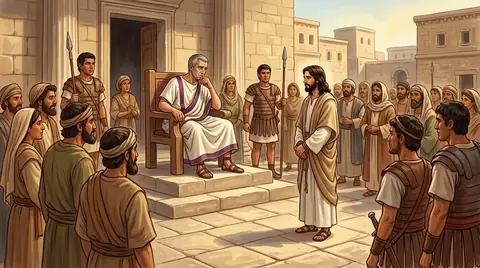 PlaceGabbathaThe paved place in Jerusalem where Pilate sat on his judgment seat and handed Jesus over to be crucified. John gives…
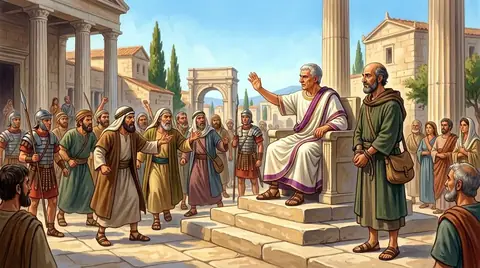 Person · Roman governorGallioThe Roman governor of Achaia when Paul was at Corinth. When the Jews brought Paul to court, Gallio refused to hear a…
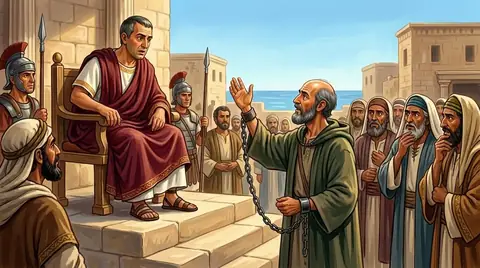 PersonFestusThe governor who took over from Felix, heard Paul's appeal to Caesar and brought him before King Agrippa, exclaiming…
Written for this app in its own words, from the Bible, with the facts checked against Bible dictionaries and encyclopedias: Easton's, Smith's, Fausset's, ISBE, Holman, the New Bible Dictionary, Vine's and the Thompson Chain topics.
