
Book
Jeremiah (book)
Old Testament · Prophets, a major prophet · written by Jeremiah, with his scribe Baruch, about 627–580 BC
The prophecies of Jeremiah, who warned Judah for forty years that Babylon would destroy Jerusalem unless they turned back to God, saw it happen, and foretold a new covenant.
- Author
- Jeremiah, with his scribe Baruch
- Written
- About 627–580 BC
- Chapters
- 52
- Key verse
- "I will put my law in their inward parts, and write it in their hearts" (Jeremiah 31:33)
What it's about
God called Jeremiah as a young man, telling him, "Before I formed thee in the belly I knew thee" (Jeremiah 1:5). He prophesied from the days of good King Josiah to the fall of Jerusalem in 586 BC. His message was hard: Judah had forsaken God, "the fountain of living waters" (Jeremiah 2:13), and judgment was coming from the north.
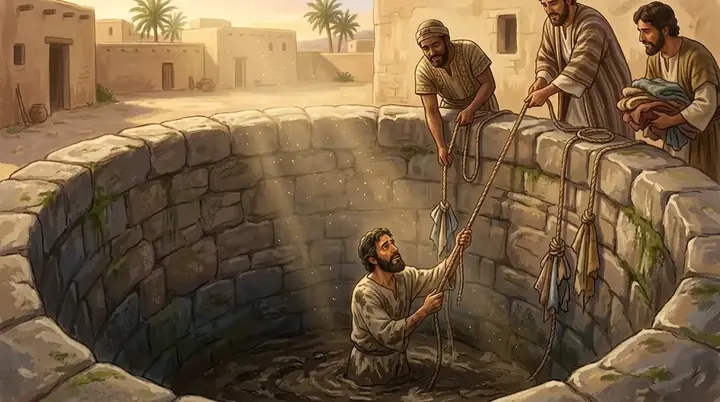
He acted out his message with a ruined linen belt, a potter's clay and a wooden yoke. For his words he was beaten, put in the stocks, thrown into a muddy cistern and called a traitor. King Jehoiakim cut up his scroll and burned it, so he dictated it again (Jeremiah 36). After the city fell he was taken, against his will, to Egypt. The last chapters judge the nations, Babylon among them.
Its message
God is patient but just, and sin has real consequences. Yet even in judgment he plans good for his people. He told the exiles to pray for Babylon and promised to bring them home after seventy years (Jeremiah 29:10–14). Jeremiah, often called the weeping prophet, shows faithfulness when nobody listens.
Points to Christ
Jeremiah foretold a righteous Branch from David's line (Jeremiah 23:5–6) and a new covenant in which God would forgive sins and write his law on hearts (Jeremiah 31:31–34). Jesus spoke of "the new testament in my blood" (Luke 22:20), and Hebrews quotes Jeremiah's promise in full (Hebrews 8:8–12).
Key verses
- Jeremiah 1:5
Before I formed thee in the belly I knew thee; and before thou camest forth out of the womb I sanctified thee, and I ordained thee a prophet unto the nations.
- Jeremiah 17:9
The heart is deceitful above all things, and desperately wicked: who can know it?
- Jeremiah 29:11–13
For I know the thoughts that I think toward you, saith the Lord, thoughts of peace, and not of evil, to give you an expected end. Then shall ye call upon me, and ye shall go and pray unto me, and I will hearken unto you. And ye shall seek me, and find me, when ye shall search for me with all your heart.
- Jeremiah 31:31–34
Behold, the days come, saith the Lord, that I will make a new covenant with the house of Israel, and with the house of Judah: Not according to the covenant that I made with their fathers in the day that I took them by the hand to bring them out of the land of Egypt; which my covenant they brake, although I was an husband unto them, saith the Lord: But this shall be the covenant that I will make with the house of Israel; After those days, saith the Lord, I will put my law in their inward parts, and write it in their hearts; and will be their God, and they shall be my people. …
- Jeremiah 32:17
Ah Lord God! behold, thou hast made the heaven and the earth by thy great power and stretched out arm, and there is nothing too hard for thee:
On the map
Read next
 PersonJeremiahThe prophet who warned Judah for forty years that Babylon was coming, and wept as it came. He was beaten, put in the…
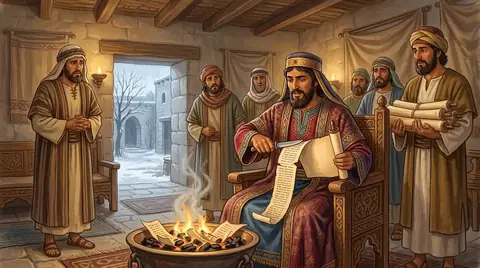 PersonBaruchJeremiah's faithful secretary. He wrote the prophet's words on a scroll, read them in the temple, and wrote them all…
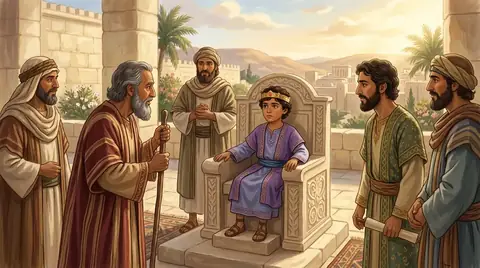 PersonJosiahThe boy king of Judah who turned the nation back to God. When the lost Book of the Law was found in the temple, he tore…
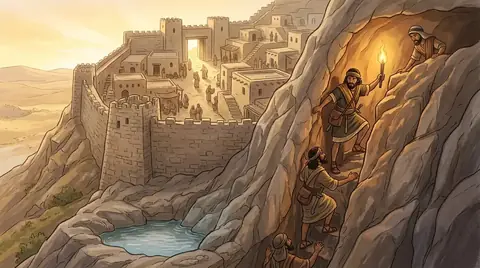 PlaceJerusalemThe city David made his capital and where Solomon built the temple. Jesus died and rose there and the church began…PersonJehoiakimThe king of Judah who cut up Jeremiah's scroll and burned it in his fire. Put on the throne by Pharaoh, he rebelled…
Written for this app in its own words, from the Bible, with the facts checked against Bible dictionaries and encyclopedias: Easton's, Smith's, Fausset's, ISBE, Holman, the New Bible Dictionary, Vine's and the Thompson Chain topics.
