
Name of God
Jehovah-shammah (the LORD is there)
je-HO-va SHAM-mah
The last words of the book of Ezekiel: the name of the city he saw in his vision, "The LORD is there". God's glory had left Jerusalem; one day it would come back and never leave.
- Meaning
- The LORD is there
- Where
- Ezekiel 48:35
- Given by
- Ezekiel, in exile by the river Chebar
The glory leaves
Ezekiel was a priest carried off to Babylon with King Jehoiachin. In a vision he watched the glory of the LORD rise from the temple, pause at the east gate, and leave the city for the Mount of Olives (Ezekiel 10:18–19; Ezekiel 11:23). God had gone from his house because of the idols in it; soon afterwards the Babylonians burned it down.
The glory returns
Years later, in a long vision of a new temple, Ezekiel saw the glory come back by the same east gate and fill the house, and heard God say this was where he would live among his people for ever (Ezekiel 43:1–7). He measured a new city, and his book ends with its name: Jehovah-shammah, "The LORD is there" (Ezekiel 48:35). Whatever else the city had, it had God, and that made it home.
In Jesus
John says the Word "dwelt among us", literally pitched his tent, "and we beheld his glory" (John 1:14). Jesus is God with us. Revelation ends where Ezekiel ends, with a holy city and a voice saying, "the tabernacle of God is with men, and he will dwell with them" (Revelation 21:3). It has no temple, because the Lord God and the Lamb are its temple (Revelation 21:22).
Key verses
- Ezekiel 11:23
And the glory of the Lord went up from the midst of the city, and stood upon the mountain which is on the east side of the city.
- Ezekiel 43:1–7
Afterward he brought me to the gate, even the gate that looketh toward the east: And, behold, the glory of the God of Israel came from the way of the east: and his voice was like a noise of many waters: and the earth shined with his glory. And it was according to the appearance of the vision which I saw, even according to the vision that I saw when I came to destroy the city: and the visions were like the vision that I saw by the river Chebar; and I fell upon my face. …
- Ezekiel 48:35
It was round about eighteen thousand measures: and the name of the city from that day shall be, The Lord is there.
- Revelation 21:3
And I heard a great voice out of heaven saying, Behold, the tabernacle of God is with men, and he will dwell with them, and they shall be his people, and God himself shall be with them, and be their God.
Read next
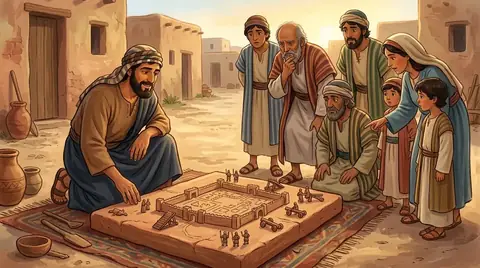 PersonEzekielA priest and prophet taken to Babylon with the exiles from Judah. By the river Chebar he saw visions of God's glory and…
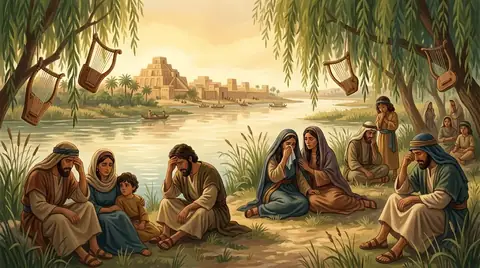 Place · CityBabylonThe great city on the Euphrates where the tower of Babel was built. Under Nebuchadnezzar it ruled the world, destroyed…
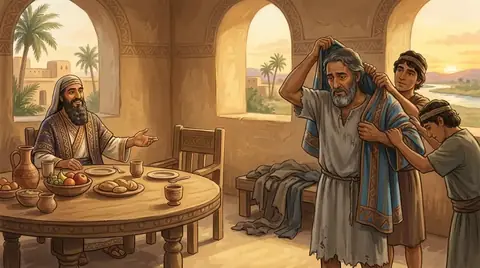 PersonJehoiachinThe young king of Judah who reigned three months before surrendering Jerusalem to Nebuchadnezzar. He spent thirty-seven…
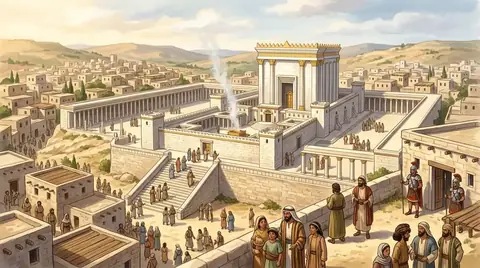 Thing · WorshipThe TempleGod's house in Jerusalem, where he was worshipped and the sacrifices offered. Solomon built it, Babylon burned it, the…
Written for this app in its own words, from the Bible, with the facts checked against Bible dictionaries and encyclopedias: Easton's, Smith's, Fausset's, ISBE, Holman, the New Bible Dictionary, Vine's and the Thompson Chain topics.
