
Symbol
Horns
A picture of strength and of kingly power, taken from the horns of a bull or wild ox. Lifting up one's horn means being strong, or proud; in Daniel and Revelation the horns of beasts are kings.
- Of strength
- Deuteronomy 33:17; 1 Samuel 2:1; Psalms 92:10; Luke 1:69
- Of kings
- Daniel 7:7–24; Daniel 8:3–22; Zechariah 1:18–21; Revelation 13:1; Revelation 17:12
- Real horns
- Trumpets (Joshua 6:4), oil flasks (1 Samuel 16:1), the horns of the altar (Exodus 27:2)
The picture
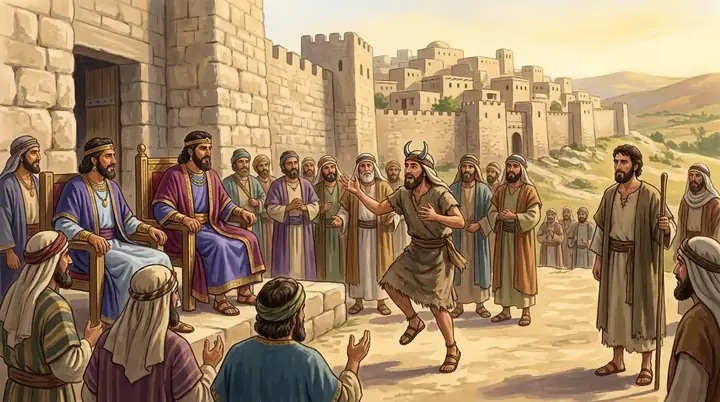
A wild ox with its head down is the strongest thing a shepherd ever met, and its horns are where the strength shows. So the Bible says that God is "the horn of my salvation", a strong Saviour (Psalms 18:2), and that he exalts the horn of his people, makes them strong and lifts their heads (Psalms 89:17; Psalms 92:10). Hannah sang "mine horn is exalted in the LORD" when her prayer for a son was answered (1 Samuel 2:1). On the other side, to "lift up the horn" against God is to be proud and defiant (Psalms 75:4–5). A prophet named Zedekiah made himself iron horns and told Ahab he would push the Syrians to destruction with them, which did not happen (1 Kings 22:11).
Horns as kings
In Daniel's visions the empires are beasts, and their horns are their kings. The fourth beast has ten horns, and a little horn grows up among them that speaks great words against God (Daniel 7:7–8; Daniel 7:24). A ram with two horns is the kings of Media and Persia; the goat's great horn, broken at its height, is the first king of Greece, Alexander (Daniel 8:20–22). Zechariah saw four horns that had scattered Judah, and four craftsmen come to cut them down (Zechariah 1:18–21). Revelation uses the same language: the dragon and the beast have ten horns, "ten kings" (Revelation 13:1; Revelation 17:12). Over against them stands the Lamb with seven horns, perfect power in the one who was slain (Revelation 5:6).
Real horns
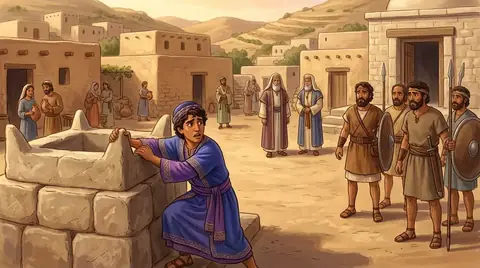
Rams' horns were blown as trumpets, as at the fall of Jericho (Joshua 6:4). A hollowed horn held the oil with which Samuel anointed David and Zadok anointed Solomon (1 Samuel 16:13; 1 Kings 1:39). And the altars had horn-shaped corners on which the blood of the sacrifice was put.
Key verses
- 1 Samuel 2:1
And Hannah prayed, and said, My heart rejoiceth in the Lord, mine horn is exalted in the Lord: my mouth is enlarged over mine enemies; because I rejoice in thy salvation.
- Psalms 18:2
The Lord is my rock, and my fortress, and my deliverer; my God, my strength, in whom I will trust; my buckler, and the horn of my salvation, and my high tower.
- Psalms 92:10
But my horn shalt thou exalt like the horn of an unicorn: I shall be anointed with fresh oil.
- Daniel 7:24
And the ten horns out of this kingdom are ten kings that shall arise: and another shall rise after them; and he shall be diverse from the first, and he shall subdue three kings.
- Luke 1:69
And hath raised up an horn of salvation for us in the house of his servant David;
- Revelation 5:6
And I beheld, and, lo, in the midst of the throne and of the four beasts, and in the midst of the elders, stood a Lamb as it had been slain, having seven horns and seven eyes, which are the seven Spirits of God sent forth into all the earth.
Read next
Written for this app in its own words, from the Bible, with the facts checked against Bible dictionaries and encyclopedias: Easton's, Smith's, Fausset's, ISBE, Holman, the New Bible Dictionary, Vine's and the Thompson Chain topics.
