
Thing · Nature
Hoof
The hard foot of cattle, sheep, horses and deer. Whether an animal's hoof was divided in two was one of the two tests for whether Israel could eat it.
- Clean animals
- Divided hoof and chews the cud: cattle, sheep, goats, deer (Leviticus 11:3)
- Unclean
- Divided hoof only: the pig; cud only: the camel (Leviticus 11:4–7)
- Where
- Exodus 10:26; Leviticus 11:3–8; Deuteronomy 14:6–8; Isaiah 5:28; Ezekiel 32:13
In the law
God gave Israel a simple rule for which animals were clean to eat: it must both chew the cud and have a hoof "clovenfooted", split into two (Leviticus 11:3; Deuteronomy 14:6). Cattle, sheep, goats and deer pass both tests. The camel and the rabbit chew the cud but do not have a divided hoof; the pig has the hoof but does not chew the cud; so all were unclean (Leviticus 11:4–7). The rule did not need a scholar; a shepherd boy could apply it. Why these marks were chosen isn't explained, and the apostles later taught that in Christ the food laws no longer bind (Acts 10:15; Mark 7:19).
Elsewhere
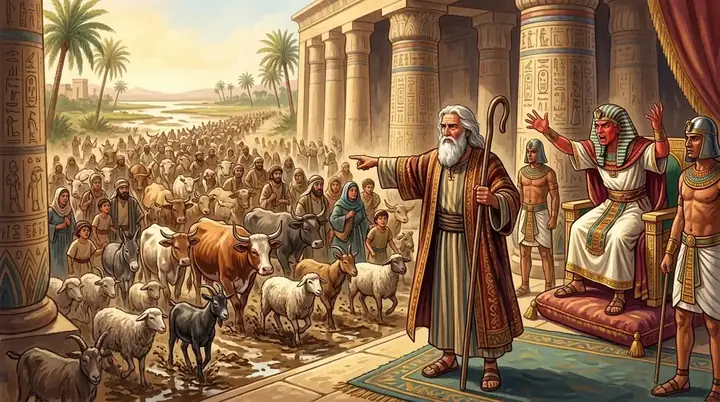
When Pharaoh offered to let Israel go without their cattle, Moses refused: "there shall not an hoof be left behind" (Exodus 10:26), for they did not yet know what God would ask them to sacrifice. Isaiah pictures the Assyrian cavalry with horses' hoofs "counted like flint" (Isaiah 5:28), and Ezekiel foretells a day when no hoof will muddy Egypt's rivers (Ezekiel 32:13).
Key verses
- Leviticus 11:3–4
Whatsoever parteth the hoof, and is clovenfooted, and cheweth the cud, among the beasts, that shall ye eat. Nevertheless these shall ye not eat of them that chew the cud, or of them that divide the hoof: as the camel, because he cheweth the cud, but divideth not the hoof; he is unclean unto you.
- Deuteronomy 14:6
And every beast that parteth the hoof, and cleaveth the cleft into two claws, and cheweth the cud among the beasts, that ye shall eat.
- Exodus 10:26
Our cattle also shall go with us; there shall not an hoof be left behind; for thereof must we take to serve the Lord our God; and we know not with what we must serve the Lord, until we come thither.
- Isaiah 5:28
Whose arrows are sharp, and all their bows bent, their horses’ hoofs shall be counted like flint, and their wheels like a whirlwind:
Read next

Written for this app in its own words, from the Bible, with the facts checked against Bible dictionaries and encyclopedias: Easton's, Smith's, Fausset's, ISBE, Holman, the New Bible Dictionary, Vine's and the Thompson Chain topics.
