
Thing · Food
Honey
The sweetest thing people in Bible times knew, gathered from wild bees in rocks and trees. Canaan was "a land flowing with milk and honey", and God's words are said to be sweeter than honey.
- Where found
- In rocks (Deuteronomy 32:13), in woods (1 Samuel 14:25), in a lion's carcass (Judges 14:8)
- Not allowed
- In offerings burned on the altar (Leviticus 2:11)
- As a picture
- God's word (Psalms 19:10; Psalms 119:103); pleasant words (Proverbs 16:24); too much of a good thing (Proverbs 25:16)
What it was
There was no sugar in the ancient world, so honey was the one real sweetener, and it was prized. Most of the honey in the Bible came from wild bees nesting in hollow trees and clefts of rock, so that the land is said to give "honey out of the rock" (Deuteronomy 32:13; Psalms 81:16). The Hebrew word can also mean a thick syrup boiled down from grapes or dates, and that may be what Jacob sent as a gift to Egypt (Genesis 43:11) and what Judah traded to Tyre (Ezekiel 27:17). John the Baptist lived on locusts and wild honey in the desert (Matthew 3:4). Honey was not to be burned on the altar (Leviticus 2:11), perhaps because it ferments.
In the Bible
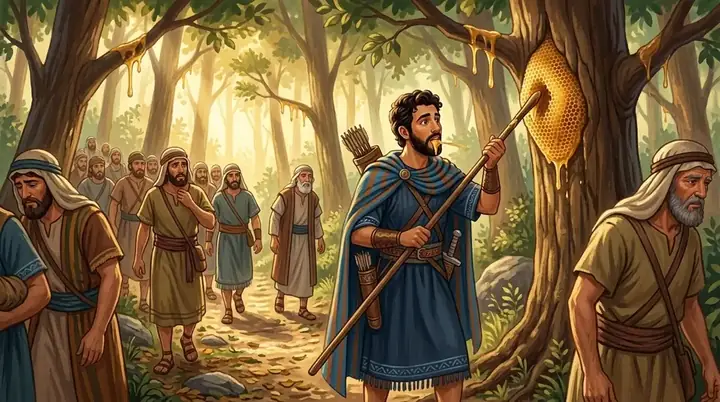
From the burning bush onwards, God described Canaan as "a land flowing with milk and honey" (Exodus 3:8), a land of pasture and wild sweetness. The manna tasted of wafers made with honey (Exodus 16:31). Samson found a swarm of bees and honey in the carcass of the lion he had killed, and made a riddle of it (Judges 14:8–14). Jonathan dipped his staff in a honeycomb on the ground during a battle and his eyes brightened, not knowing his father had forbidden the army to eat (1 Samuel 14:25–29). The risen Jesus ate broiled fish and a piece of honeycomb to show his disciples he was no ghost (Luke 24:42).
What it means
The psalmist says God's judgments are "sweeter also than honey and the honeycomb" (Psalms 19:10), and Proverbs says kind words are "as an honeycomb, sweet to the soul" (Proverbs 16:24). The same book adds a warning: eat only as much honey as you need, "lest thou be filled therewith, and vomit it" (Proverbs 25:16). Good things, taken without limit, turn bad.
Key verses
- Exodus 3:8
And I am come down to deliver them out of the hand of the Egyptians, and to bring them up out of that land unto a good land and a large, unto a land flowing with milk and honey; unto the place of the Canaanites, and the Hittites, and the Amorites, and the Perizzites, and the Hivites, and the Jebusites.
- Judges 14:8
And after a time he returned to take her, and he turned aside to see the carcase of the lion: and, behold, there was a swarm of bees and honey in the carcase of the lion.
- 1 Samuel 14:27
But Jonathan heard not when his father charged the people with the oath: wherefore he put forth the end of the rod that was in his hand, and dipped it in an honeycomb, and put his hand to his mouth; and his eyes were enlightened.
- Psalms 19:10
More to be desired are they than gold, yea, than much fine gold: sweeter also than honey and the honeycomb.
- Proverbs 25:16
Hast thou found honey? eat so much as is sufficient for thee, lest thou be filled therewith, and vomit it.
- Luke 24:42
And they gave him a piece of a broiled fish, and of an honeycomb.
Read next
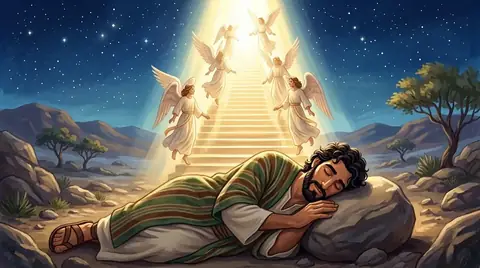 PersonJacobIsaac's younger twin son, who won his brother's birthright and blessing by cunning, was changed by God, and was renamed…
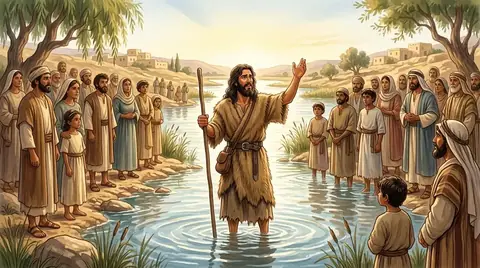 PersonJohn the BaptistThe prophet God sent to prepare the way for Jesus. He called Israel to repent, baptized in the Jordan, pointed to Jesus…
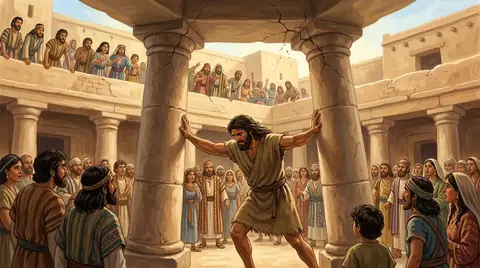 Person · JudgeSamsonThe judge of Israel with superhuman strength from God, a Nazirite from birth. He fought the Philistines single-handed…
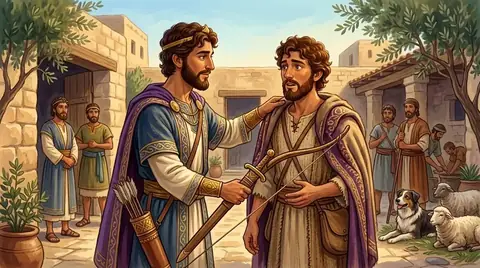 PersonJonathanSaul's eldest son and David's closest friend. A brave soldier who climbed a cliff to rout the Philistines, he gave up…
Written for this app in its own words, from the Bible, with the facts checked against Bible dictionaries and encyclopedias: Easton's, Smith's, Fausset's, ISBE, Holman, the New Bible Dictionary, Vine's and the Thompson Chain topics.
