
Measure
Homer
HOH-mer
The biggest dry measure in the Bible, about 6 bushels (220 litres), ten ephahs, the load one donkey could carry. The cor was the same amount, used for grain, flour and oil.
- Size
- About 6 bushels (220 litres); 10 ephahs; the same as a cor
- Where
- Leviticus 27:16; Numbers 11:32; Isaiah 5:10; Ezekiel 45:11–14; Hosea 3:2
What it was
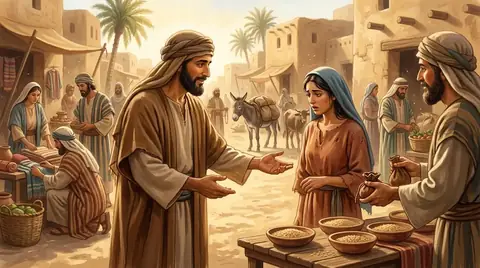
The homer takes its name from the Hebrew word for a donkey: it was a donkey-load, the largest unit for measuring grain. Ten ephahs made a homer, and the cor, used mostly in the days of the kings and in Ezekiel, was the same size (Ezekiel 45:11–14). The Greek "measures" of wheat in Jesus' story of the unjust steward are cors (Luke 16:7). Not to be confused with the omer, the tenth of an ephah, which is a hundredth of a homer.
In the Bible
Land was valued by how much seed it took to sow it: a field needing a homer of barley seed was priced at fifty shekels of silver (Leviticus 27:16). When God sent quail into the camp, even the person who gathered least had ten homers (Numbers 11:32), a glut that became a judgment. Isaiah warned that in the coming ruin a homer of seed would yield only an ephah of grain (Isaiah 5:10): a tenth of what was sown, a crop not worth the sowing. Hosea bought back his unfaithful wife for fifteen shekels and a homer and a half of barley (Hosea 3:2). Solomon's court ate thirty cors of fine flour and sixty of meal every day (1 Kings 4:22).
Key verses
- Leviticus 27:16
And if a man shall sanctify unto the Lord some part of a field of his possession, then thy estimation shall be according to the seed thereof: an homer of barley seed shall be valued at fifty shekels of silver.
- Numbers 11:32
And the people stood up all that day, and all that night, and all the next day, and they gathered the quails: he that gathered least gathered ten homers: and they spread them all abroad for themselves round about the camp.
- Isaiah 5:10
Yea, ten acres of vineyard shall yield one bath, and the seed of an homer shall yield an ephah.
- Ezekiel 45:11
The ephah and the bath shall be of one measure, that the bath may contain the tenth part of an homer, and the ephah the tenth part of an homer: the measure thereof shall be after the homer.
- Hosea 3:2
So I bought her to me for fifteen pieces of silver, and for an homer of barley, and an half homer of barley:
Read next
 Person · ProphetHoseaThe prophet God sent to Israel, the northern kingdom, in its last years. God told him to marry Gomer, who was…
Written for this app in its own words, from the Bible, with the facts checked against Bible dictionaries and encyclopedias: Easton's, Smith's, Fausset's, ISBE, Holman, the New Bible Dictionary, Vine's and the Thompson Chain topics.
