
Teaching
Gospel
Greek euangelion, "good news"; also the four books about Jesus
The good news that God has acted in Jesus to save sinners: he died for our sins, was buried, and rose again. The word also names the four books that tell his story.
- Greek
- euangelion, good news; an evangelist is one who tells it
- In a sentence
- Christ died for our sins, was buried, and rose the third day (1 Corinthians 15:3–4)
- Four Gospels
- Matthew, Mark, Luke and John
What it is
Gospel means good news. The prophets had promised a messenger with good tidings: "thy God reigneth" (Isaiah 52:7). The angel at Bethlehem brought "good tidings of great joy" (Luke 2:10), and Jesus began his work by announcing, "the kingdom of God is at hand: repent ye, and believe the gospel" (Mark 1:14–15). After the resurrection the apostles could say what the news was: Christ died for our sins according to the scriptures, was buried, and rose again the third day (1 Corinthians 15:1–4). It is "the power of God unto salvation to every one that believeth" (Romans 1:16).
What it is not
The gospel is not advice or a set of rules; it is news of what God has done. Paul calls it "the gospel of the grace of God" (Acts 20:24) and says that anyone, even an angel, who preaches a different gospel, one that adds our works to Christ's, is to be rejected (Galatians 1:6–9). It is to be believed and then obeyed, and it is for everyone: Jesus sent his followers to preach it "to every creature" (Mark 16:15), and it will be preached in all the world before the end (Matthew 24:14).
The four Gospels
From the second century the four books that tell of Jesus' life, death and resurrection have been called Gospels. Matthew wrote for Jewish readers and shows Jesus as the promised King; Mark, the shortest, shows the servant at work; Luke, the doctor, the Saviour of all kinds of people; John, the Son of God, "that ye might believe" (John 20:31). Each is a true witness, and together they give one Lord.
Key verses
- Isaiah 52:7
How beautiful upon the mountains are the feet of him that bringeth good tidings, that publisheth peace; that bringeth good tidings of good, that publisheth salvation; that saith unto Zion, Thy God reigneth!
- Mark 1:14–15
Now after that John was put in prison, Jesus came into Galilee, preaching the gospel of the kingdom of God, And saying, The time is fulfilled, and the kingdom of God is at hand: repent ye, and believe the gospel.
- Romans 1:16
For I am not ashamed of the gospel of Christ: for it is the power of God unto salvation to every one that believeth; to the Jew first, and also to the Greek.
- 1 Corinthians 15:1–4
Moreover, brethren, I declare unto you the gospel which I preached unto you, which also ye have received, and wherein ye stand; By which also ye are saved, if ye keep in memory what I preached unto you, unless ye have believed in vain. For I delivered unto you first of all that which I also received, how that Christ died for our sins according to the scriptures; …
- Galatians 1:8
But though we, or an angel from heaven, preach any other gospel unto you than that which we have preached unto you, let him be accursed.
- Matthew 24:14
And this gospel of the kingdom shall be preached in all the world for a witness unto all nations; and then shall the end come.
Read next
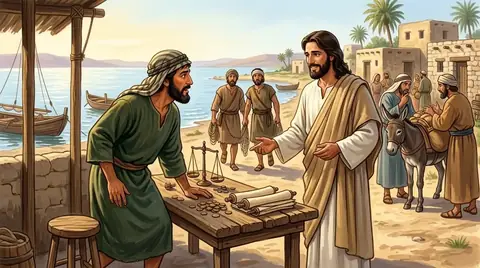 PersonMatthewA tax collector at Capernaum who left his booth the moment Jesus said "Follow me", became one of the twelve apostles…
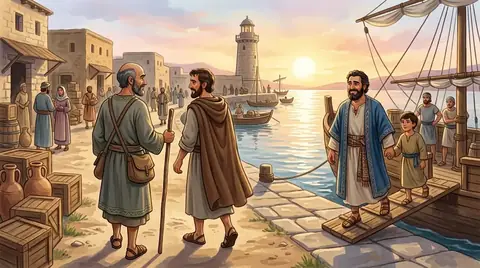 PersonMarkA young man from Jerusalem who left Paul and Barnabas halfway through their first journey, later proved himself, and…
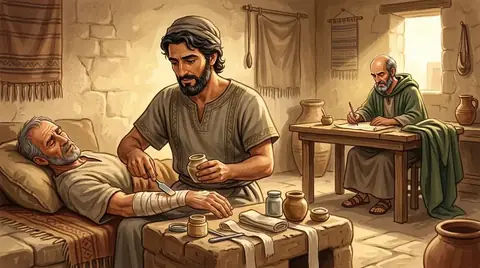 PersonLukeThe doctor who travelled with Paul and wrote the Gospel of Luke and the Acts of the Apostles, the longest contribution…
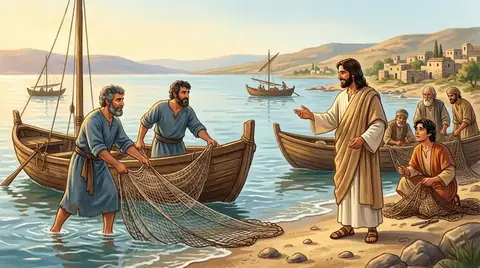 PersonJohnThe fisherman who became "the disciple whom Jesus loved". Youngest of the twelve, he stood at the cross, ran to the…
Written for this app in its own words, from the Bible, with the facts checked against Bible dictionaries and encyclopedias: Easton's, Smith's, Fausset's, ISBE, Holman, the New Bible Dictionary, Vine's and the Thompson Chain topics.
