
Custom
Fugitive
One who runs away or has fled · "fugitives" in some verses
Someone on the run: from justice, from an angry king, from slavery or from a lost battle. Cain was the first, and God's law gave a runaway slave shelter rather than sending him back.
- First
- Cain, "a fugitive and a vagabond" (Genesis 4:12)
- The law
- A runaway slave was not to be handed back (Deuteronomy 23:15–16)
- Others
- Moses, David, Jeroboam, Joseph and Mary with the child Jesus
In the Bible
When Cain killed his brother, God told him the ground would no longer yield its strength to him: "a fugitive and a vagabond shalt thou be in the earth." Cain cried that his punishment was more than he could bear (Genesis 4:12–14). A fugitive had no home, no land and no protection.
Many in the Bible fled for their lives. Moses ran from Pharaoh after killing an Egyptian (Exodus 2:15). David ran from Saul for years, hiding in caves and among the Philistines (1 Samuel 21:10). Jeroboam escaped to Egypt from Solomon (1 Kings 11:40), and Joseph took Mary and the child Jesus to Egypt to escape Herod (Matthew 2:13–15). The Hebrew words also cover those who escaped from a lost battle and deserters who went over to the enemy (2 Kings 25:11).
God's care for the runaway
Israel's law was strikingly kind to runaway slaves: "Thou shalt not deliver unto his master the servant which is escaped from his master unto thee." He could live wherever he chose, and no one was to oppress him (Deuteronomy 23:15–16). For one who had killed by accident, God provided the cities of refuge (Numbers 35:11). And when the slave Onesimus ran from his master, Paul sent him back, not in chains, but as "a brother beloved" (Philemon 1:16).
Key verses
- Genesis 4:12
When thou tillest the ground, it shall not henceforth yield unto thee her strength; a fugitive and a vagabond shalt thou be in the earth.
- Deuteronomy 23:15–16
Thou shalt not deliver unto his master the servant which is escaped from his master unto thee: He shall dwell with thee, even among you, in that place which he shall choose in one of thy gates, where it liketh him best: thou shalt not oppress him.
- Matthew 2:13–15
And when they were departed, behold, the angel of the Lord appeareth to Joseph in a dream, saying, Arise, and take the young child and his mother, and flee into Egypt, and be thou there until I bring thee word: for Herod will seek the young child to destroy him. When he arose, he took the young child and his mother by night, and departed into Egypt: And was there until the death of Herod: that it might be fulfilled which was spoken of the Lord by the prophet, saying, Out of Egypt have I called my son.
- Philemon 1:16
Not now as a servant, but above a servant, a brother beloved, specially to me, but how much more unto thee, both in the flesh, and in the Lord?
Read next
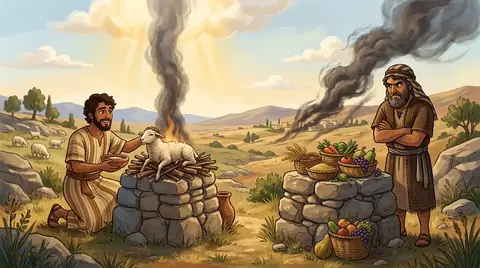 PersonCainThe first child born into the world, and the first murderer. Jealous because God accepted his brother Abel's offering…
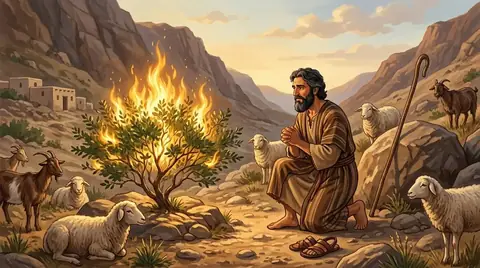 PersonMosesThe man God used to bring Israel out of Egypt, give them his Law at Sinai, and lead them for forty years in the…
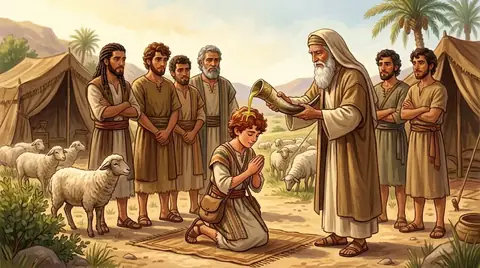 Person · KingDavidThe shepherd boy who killed Goliath and became Israel's greatest king, "a man after God's own heart". He wrote many…
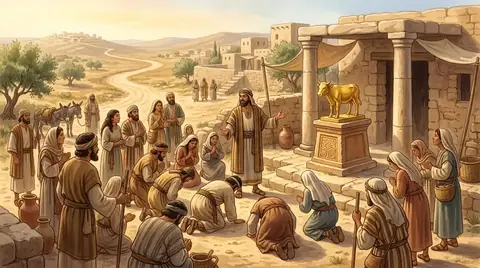 PersonJeroboamSolomon's overseer who became the first king of the breakaway northern kingdom. He set up golden calves at Bethel and…
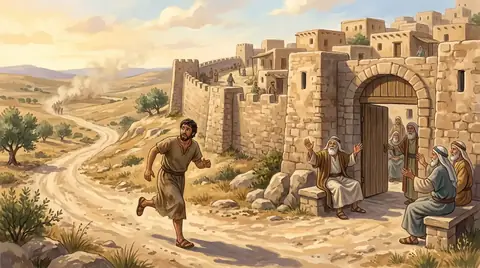 Place · LawCities of RefugeSix towns where a person who had killed someone by accident could flee from the dead man's avenging relative, and be…
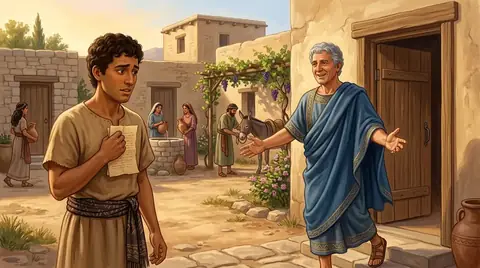 PersonOnesimusA runaway slave from Colossae who met Paul, became a Christian, and was sent back to his master Philemon with Paul's…
Written for this app in its own words, from the Bible, with the facts checked against Bible dictionaries and encyclopedias: Easton's, Smith's, Fausset's, ISBE, Holman, the New Bible Dictionary, Vine's and the Thompson Chain topics.
