
Custom · Worship
Free-will offering
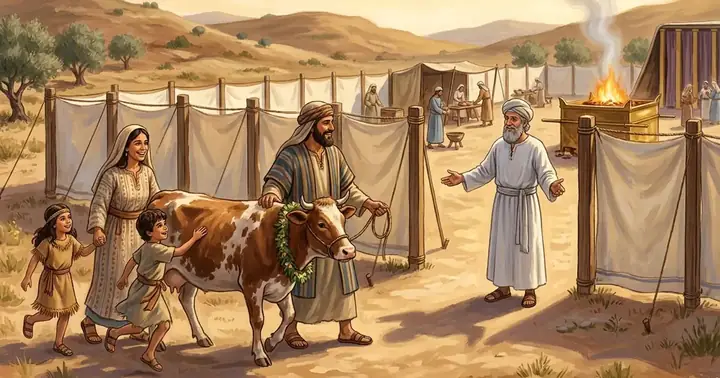
A sacrifice or gift brought because the giver wanted to, not because the law or a vow required it. The rules for it were a little easier than for a vow, since it came from a willing heart; God loves a cheerful giver.
- Where
- Leviticus 22:18–23; Leviticus 23:38; Numbers 29:39; Deuteronomy 12:6; Ezra 3:5; Psalms 119:108
- Compared with
- The vow, which was owed once promised, and the sin offering, which was required
What it was
Most offerings in the law were owed: the daily lambs, the sin offering for a fault, the vow once a vow was made. The free-will offering was different. It was a burnt offering or a peace offering brought simply because someone wished to thank or honour God (Leviticus 22:18–21). For that reason the rules bent a little: a sheep or ox with a limb too long or too short could not be given for a vow, but it could be a free-will offering (Leviticus 22:23). The feasts had their own fixed sacrifices, and on top of them people might bring "your freewill offerings, which ye give unto the LORD" (Leviticus 23:38; Numbers 29:39). They were eaten with joy before the LORD at the place he chose (Deuteronomy 12:6–7).
In later days
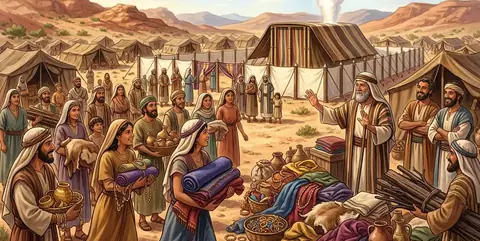
When the exiles came home, they began offering free-will offerings before the temple foundation was even laid (Ezra 3:5), and the king of Persia and his counsellors sent silver and gold "freely offered" for God's house (Ezra 7:15–16). The psalmist asks God to accept "the freewill offerings of my mouth" (Psalms 119:108), his praise given gladly. The gifts for the tabernacle and the temple, brought by the willing, are told under the freewill offering.
Key verses
- Leviticus 22:18–23
Speak unto Aaron, and to his sons, and unto all the children of Israel, and say unto them, Whatsoever he be of the house of Israel, or of the strangers in Israel, that will offer his oblation for all his vows, and for all his freewill offerings, which they will offer unto the Lord for a burnt offering; Ye shall offer at your own will a male without blemish, of the beeves, of the sheep, or of the goats. But whatsoever hath a blemish, that shall ye not offer: for it shall not be acceptable for you. …
- Deuteronomy 12:6
And thither ye shall bring your burnt offerings, and your sacrifices, and your tithes, and heave offerings of your hand, and your vows, and your freewill offerings, and the firstlings of your herds and of your flocks:
- Ezra 3:5
And afterward offered the continual burnt offering, both of the new moons, and of all the set feasts of the Lord that were consecrated, and of every one that willingly offered a freewill offering unto the Lord.
- Psalms 119:108
Accept, I beseech thee, the freewill offerings of my mouth, O Lord, and teach me thy judgments.
Read next
Written for this app in its own words, from the Bible, with the facts checked against Bible dictionaries and encyclopedias: Easton's, Smith's, Fausset's, ISBE, Holman, the New Bible Dictionary, Vine's and the Thompson Chain topics.
