
Custom · Worship
Food laws
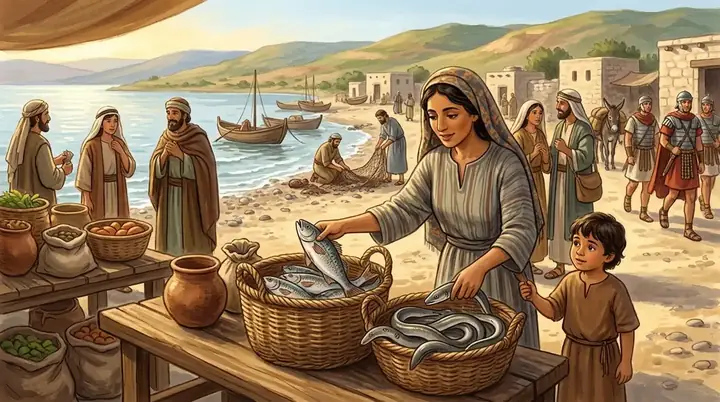
Israel could eat only "clean" animals: beasts that chew the cud and have a divided hoof, fish that have fins and scales, and the birds the law allowed, and never blood. The rules kept Israel distinct among the nations. In the New Testament God made plain that no food is unclean.
- Clean
- Ox, sheep, goat, deer; fish with fins and scales; locusts (Leviticus 11:3, 9, 22)
- Unclean
- Pig, camel, rabbit; shellfish and eels; birds of prey; most insects and creeping things (Leviticus 11)
- Never
- Blood (Leviticus 17:10–14); an animal that died of itself or was torn (Exodus 22:31)
- Ended
- Mark 7:18–19; Acts 10:9–16; 1 Timothy 4:3–5
The rules
Leviticus 11 and Deuteronomy 14 list what Israel could and could not eat. A land animal was clean if it both chewed the cud and had a divided hoof, so cattle, sheep, goats and deer were allowed, but the pig, the camel and the rabbit were not. Fish needed fins and scales; shellfish and eels were out. Eagles, vultures, owls and other birds of prey were forbidden; most insects too, though locusts could be eaten. Nothing that died by itself, and above all no blood, "for the life of the flesh is in the blood" (Leviticus 17:11). Blood belonged to God and the altar.
Why
God gave one reason: "ye shall be holy; for I am holy" (Leviticus 11:45). The rules set his people apart in the most everyday thing they did, three times a day, and kept them from sitting at the tables of the nations and their gods. Daniel and his friends refused the king's food in Babylon for this reason (Daniel 1:8). By New Testament times the laws had become a wall between Jew and Gentile, and a Jew would not eat in a Gentile's house.
In the New Testament
Jesus taught that what goes into a man's mouth cannot defile him; only what comes out of his heart can, and Mark adds that in saying this he made all foods clean (Mark 7:18–19). Peter saw a sheet let down from heaven full of unclean animals and heard, "What God hath cleansed, that call not thou common" (Acts 10:15), and went to eat with the Gentile Cornelius. The council at Jerusalem asked Gentile believers only to keep from blood and from food offered to idols, for the sake of peace (Acts 15:20). Paul says no food is unclean in itself, but love may make a Christian give up his freedom for a weaker brother's sake (Romans 14:14–21; 1 Corinthians 8).
Key verses
- Leviticus 11:1–47
And the Lord spake unto Moses and to Aaron, saying unto them, Speak unto the children of Israel, saying, These are the beasts which ye shall eat among all the beasts that are on the earth. Whatsoever parteth the hoof, and is clovenfooted, and cheweth the cud, among the beasts, that shall ye eat. …
- Leviticus 17:10–14
And whatsoever man there be of the house of Israel, or of the strangers that sojourn among you, that eateth any manner of blood; I will even set my face against that soul that eateth blood, and will cut him off from among his people. For the life of the flesh is in the blood: and I have given it to you upon the altar to make an atonement for your souls: for it is the blood that maketh an atonement for the soul. Therefore I said unto the children of Israel, No soul of you shall eat blood, neither shall any stranger that sojourneth among you eat blood. …
- Daniel 1:8
But Daniel purposed in his heart that he would not defile himself with the portion of the king’s meat, nor with the wine which he drank: therefore he requested of the prince of the eunuchs that he might not defile himself.
- Mark 7:18–19
And he saith unto them, Are ye so without understanding also? Do ye not perceive, that whatsoever thing from without entereth into the man, it cannot defile him; Because it entereth not into his heart, but into the belly, and goeth out into the draught, purging all meats?
- Acts 10:9–16
On the morrow, as they went on their journey, and drew nigh unto the city, Peter went up upon the housetop to pray about the sixth hour: And he became very hungry, and would have eaten: but while they made ready, he fell into a trance, And saw heaven opened, and a certain vessel descending unto him, as it had been a great sheet knit at the four corners, and let down to the earth: …
- Romans 14:14
I know, and am persuaded by the Lord Jesus, that there is nothing unclean of itself: but to him that esteemeth any thing to be unclean, to him it is unclean.
Read next
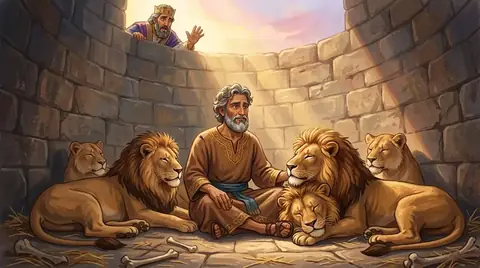 Person · ProphetDanielA young noble of Judah carried off to Babylon, who served four kings with wisdom and never bent his faith. God gave him…
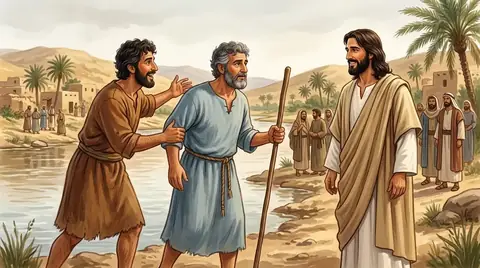 PersonPeterA Galilean fisherman who became the leader of the twelve apostles. Bold and impulsive, he confessed Jesus as the…
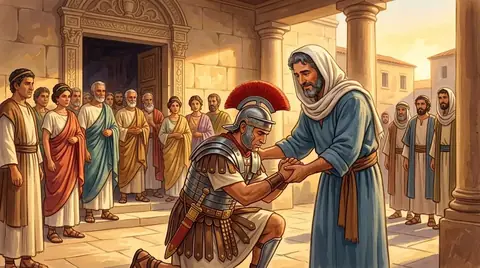 PersonCorneliusA Roman centurion at Caesarea, a God-fearing man, to whom Peter was sent by a vision. His household were the first…
Written for this app in its own words, from the Bible, with the facts checked against Bible dictionaries and encyclopedias: Easton's, Smith's, Fausset's, ISBE, Holman, the New Bible Dictionary, Vine's and the Thompson Chain topics.
