
Book
Ezekiel (book)
e-ZEE-kee-elOld Testament · Prophets, a major prophet · written by Ezekiel, about 593–571 BC
The prophecies of Ezekiel, a priest taken captive to Babylon, who warned of Jerusalem's fall and then promised that God would give his people a new heart, raise them like dry bones, and dwell with them again.
- Author
- Ezekiel son of Buzi, a priest
- Written
- About 593–571 BC, among the exiles in Babylonia
- Chapters
- 48
- Key verse
- "A new heart also will I give you, and a new spirit will I put within you" (Ezekiel 36:26)
What it's about
Ezekiel was taken to Babylon in 597 BC with King Jehoiachin. Five years later, by the river Chebar, he saw a dazzling vision of God's glory, with living creatures and wheels full of eyes (Ezekiel 1). God made him a watchman for Israel.
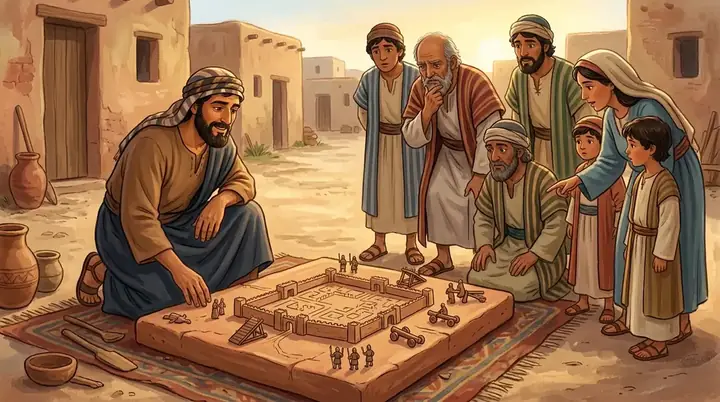
Before Jerusalem fell he acted out its siege, lying on his side and eating siege rations, and saw God's glory leave the defiled temple (Ezekiel 10). After the news of the city's fall reached him, his message turned to hope: God himself would shepherd his scattered sheep (Ezekiel 34), a valley of dry bones would come to life (Ezekiel 37), and a new temple would stand, with a river flowing from it (Ezekiel 40–48).
Its message
God is holy and his glory cannot stay where idols are worshipped. Each person answers for his own sin, but God has "no pleasure in the death of him that dieth" and calls, "turn yourselves, and live" (Ezekiel 18:32). Over and over the book says why God acts: "ye shall know that I am the LORD."
Points to Christ
God promised to set over his flock one shepherd, "my servant David" (Ezekiel 34:23). Jesus called himself the good shepherd (John 10:11). The book ends with the city's new name, "The LORD is there" (Ezekiel 48:35), fulfilled when God dwells with his people (Revelation 21:3).
Key verses
- Ezekiel 18:31–32
Cast away from you all your transgressions, whereby ye have transgressed; and make you a new heart and a new spirit: for why will ye die, O house of Israel? For I have no pleasure in the death of him that dieth, saith the Lord God: wherefore turn yourselves, and live ye.
- Ezekiel 34:11–12
For thus saith the Lord God; Behold, I, even I, will both search my sheep, and seek them out. As a shepherd seeketh out his flock in the day that he is among his sheep that are scattered; so will I seek out my sheep, and will deliver them out of all places where they have been scattered in the cloudy and dark day.
- Ezekiel 36:26–27
A new heart also will I give you, and a new spirit will I put within you: and I will take away the stony heart out of your flesh, and I will give you an heart of flesh. And I will put my spirit within you, and cause you to walk in my statutes, and ye shall keep my judgments, and do them.
- Ezekiel 37:4–5
Again he said unto me, Prophesy upon these bones, and say unto them, O ye dry bones, hear the word of the Lord. Thus saith the Lord God unto these bones; Behold, I will cause breath to enter into you, and ye shall live:
- Ezekiel 48:35
It was round about eighteen thousand measures: and the name of the city from that day shall be, The Lord is there.
On the map
Read next
 PersonEzekielA priest and prophet taken to Babylon with the exiles from Judah. By the river Chebar he saw visions of God's glory and…
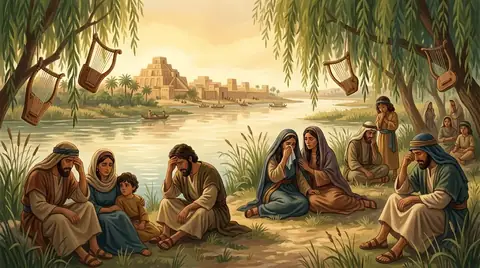 Place · CityBabylonThe great city on the Euphrates where the tower of Babel was built. Under Nebuchadnezzar it ruled the world, destroyed…
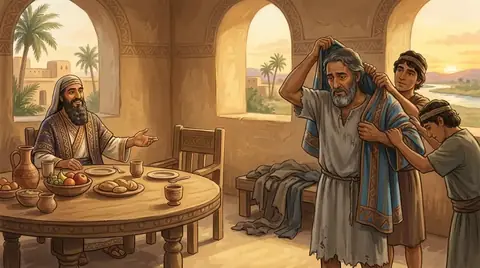 PersonJehoiachinThe young king of Judah who reigned three months before surrendering Jerusalem to Nebuchadnezzar. He spent thirty-seven…
Written for this app in its own words, from the Bible, with the facts checked against Bible dictionaries and encyclopedias: Easton's, Smith's, Fausset's, ISBE, Holman, the New Bible Dictionary, Vine's and the Thompson Chain topics.
