
Person · Office
Executioner
New Testament · a soldier of the king's guard
The guardsman King Herod sent to behead John the Baptist in prison. Mark's word for him is a Latin one, for a soldier of the royal bodyguard who also carried out death sentences.
- Known for
- Beheading John the Baptist (Mark 6:27)
- Greek
- Spekoulator, from a Latin word for a scout or guardsman
At Herod's birthday feast, the daughter of Herodias danced, and Herod rashly promised her anything she asked. At her mother's prompting she asked for the head of John the Baptist. The king was sorry, but would not go back on his oath before his guests, "and immediately the king sent an executioner" who beheaded John in the prison and brought his head on a dish (Mark 6:26–28).
The word Mark uses is borrowed from Latin. It meant a scout, and then one of the armed bodyguard of a ruler; such men also carried out the king's sentences. In the Old Testament the officer called the "captain of the guard", like Potiphar in Egypt and Nebuzaradan in Babylon, held a similar post (Genesis 37:36; Jeremiah 39:9). Proverbs warns that "the wrath of a king is as messengers of death" (Proverbs 16:14).
Key verses
- Mark 6:27
And immediately the king sent an executioner, and commanded his head to be brought: and he went and beheaded him in the prison,
- Genesis 37:36
And the Midianites sold him into Egypt unto Potiphar, an officer of Pharaoh’s, and captain of the guard.
- Proverbs 16:14
The wrath of a king is as messengers of death: but a wise man will pacify it.
Read next
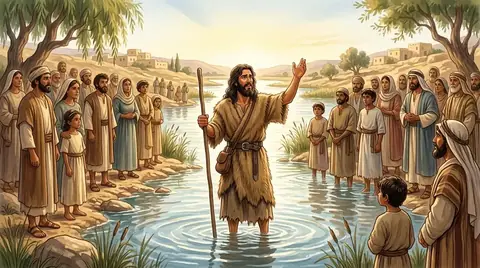 PersonJohn the BaptistThe prophet God sent to prepare the way for Jesus. He called Israel to repent, baptized in the Jordan, pointed to Jesus…
 Person · MartyrAntipasA Christian of Pergamum whom the risen Jesus calls "my faithful martyr". He was killed for his faith in a city where…PersonHerodiasThe wife of Herod Antipas, who had left his brother Philip to marry him. John the Baptist called the marriage unlawful…
Written for this app in its own words, from the Bible, with the facts checked against Bible dictionaries and encyclopedias: Easton's, Smith's, Fausset's, ISBE, Holman, the New Bible Dictionary, Vine's and the Thompson Chain topics.
