
Teaching
Earth
Also world
In the Bible "earth" can mean the soil, a country, the dry land, or the whole world and everyone on it. God made it, cursed it for man's sake, gave it to mankind, and promises a new earth where righteousness lives.
- Hebrew
- Adamah, the ground or soil (Genesis 2:7); erets, the land or the earth (Genesis 1:1)
- Key verses
- Genesis 1:1; Psalms 24:1; Psalms 115:16; Isaiah 66:1; Matthew 5:5; 2 Peter 3:13; Revelation 21:1
- In the New Testament
- "The earth" can also mean the land of Israel (Matthew 23:35), or what is earthly against what is heavenly (Colossians 3:2)
Many meanings
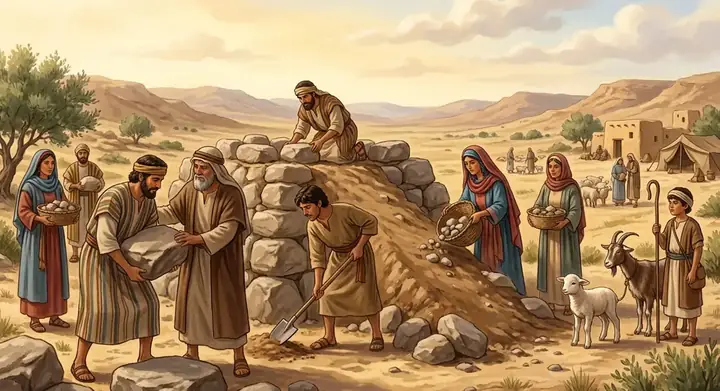
The Hebrew words behind "earth" stretch from a handful of soil to the whole globe. Man is made of the earth, and a farmer is "a man of the ground" (Genesis 9:20). An altar could be built of earth (Exodus 20:24), and Naaman carried home two mule-loads of Israel's soil to worship the LORD on (2 Kings 5:17). The same word means a country, "the land of Canaan"; the dry land as against the sea (Genesis 1:10); and all the earth and its people, as at Babel when "the whole earth was of one language" (Genesis 11:1). Readers must often ask which is meant.
God's earth
"In the beginning God created the heaven and the earth" (Genesis 1:1), hanging it on nothing (Job 26:7) and setting its foundations so that it should not be moved (Psalms 104:5). He did not make it in vain but to be lived in (Isaiah 45:18). It is his: "The earth is the LORD's, and the fulness thereof" (Psalms 24:1), heaven his throne and the earth his footstool (Isaiah 66:1). Yet he gave it to the children of men (Psalms 115:16). After Adam's sin the ground was cursed and would yield thorns (Genesis 3:17–18), and Paul says the whole creation groans, waiting to be set free (Romans 8:19–22).
The new earth
The earth as we know it will not last. Heaven and earth will pass away, but Christ's words will not (Matthew 24:35); the elements will melt with heat (2 Peter 3:10). But the end of the story is not the end of the earth. Isaiah foresaw "new heavens and a new earth" (Isaiah 65:17), Peter looked for them "wherein dwelleth righteousness" (2 Peter 3:13), and John saw them come (Revelation 21:1). The meek, Jesus promised, shall inherit it (Matthew 5:5). Meanwhile his followers are "the salt of the earth" (Matthew 5:13), with their treasure laid up above it (Matthew 6:19–20).
Key verses
- Genesis 1:1
In the beginning God created the heaven and the earth.
- Psalms 24:1
A Psalm of David. The earth is the Lord’s, and the fulness thereof; the world, and they that dwell therein.
- Psalms 115:16
The heaven, even the heavens, are the Lord’s: but the earth hath he given to the children of men.
- Matthew 5:5
Blessed are the meek: for they shall inherit the earth.
- 2 Peter 3:13
Nevertheless we, according to his promise, look for new heavens and a new earth, wherein dwelleth righteousness.
- Revelation 21:1
And I saw a new heaven and a new earth: for the first heaven and the first earth were passed away; and there was no more sea.
Read next
Written for this app in its own words, from the Bible, with the facts checked against Bible dictionaries and encyclopedias: Easton's, Smith's, Fausset's, ISBE, Holman, the New Bible Dictionary, Vine's and the Thompson Chain topics.
