
Measure · Money
Drachma (piece of silver)
DRAK-ma
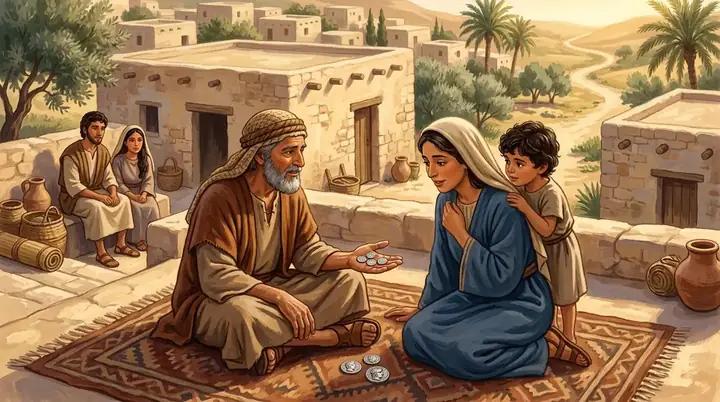
The everyday Greek silver coin, equal to a Roman denarius and to one day's pay. It is the "piece of silver" the woman in Jesus' parable swept her house to find, and two of them paid the temple tax.
- Where
- Luke 15:8–9; Matthew 17:24–27
- Worth
- About one denarius, a labourer's daily pay (Matthew 20:2)
- Related coins
- The didrachma (two drachmas), the temple tax; the stater (four drachmas), found in the fish's mouth
The coin
Greek money was used all over the eastern Roman world alongside Roman coins. The drachma was the everyday silver piece, about the size of a fingernail, and would buy a day's bread for a family. Every Jewish man paid half a shekel a year for the temple, and in Greek coin that was a didrachma, two drachmas (Exodus 30:13; Matthew 17:24).
In the Gospels
Jesus told of a woman who had ten pieces of silver and lost one. She lit a lamp, swept the house and searched until she found it, then called her neighbours to rejoice with her. "Likewise," he said, "there is joy in the presence of the angels of God over one sinner that repenteth" (Luke 15:8–10). The lost coin may have been part of her savings or her wedding headdress; either way, one in ten was a loss worth searching for.
At Capernaum the tax collectors asked Peter whether his master paid the two-drachma tax. Jesus sent him to cast a line into the lake; in the mouth of the first fish was a stater, four drachmas, enough for both of them (Matthew 17:24–27). The King's Son owed no tax to his Father's house, but he paid it rather than give offence.
Key verses
- Luke 15:8–10
Either what woman having ten pieces of silver, if she lose one piece, doth not light a candle, and sweep the house, and seek diligently till she find it? And when she hath found it, she calleth her friends and her neighbours together, saying, Rejoice with me; for I have found the piece which I had lost. Likewise, I say unto you, there is joy in the presence of the angels of God over one sinner that repenteth.
- Matthew 17:24–27
And when they were come to Capernaum, they that received tribute money came to Peter, and said, Doth not your master pay tribute? He saith, Yes. And when he was come into the house, Jesus prevented him, saying, What thinkest thou, Simon? of whom do the kings of the earth take custom or tribute? of their own children, or of strangers? Peter saith unto him, Of strangers. Jesus saith unto him, Then are the children free. …
Read next
Written for this app in its own words, from the Bible, with the facts checked against Bible dictionaries and encyclopedias: Easton's, Smith's, Fausset's, ISBE, Holman, the New Bible Dictionary, Vine's and the Thompson Chain topics.
