
Thing · Stone
Diamond
One of the twelve stones on the high priest's breastplate, in the King James Bible. Which stone the Hebrew word means isn't certain; the same word elsewhere is a hard point that engraves.
- Where
- Exodus 28:18; Exodus 39:11; Jeremiah 17:1; Ezekiel 28:13
- Hebrew
- Yahalom (the breastplate stone); shamir, a hard point, in Jeremiah 17:1
- Tribe
- Traditionally the stone of Naphtali
On the breastplate
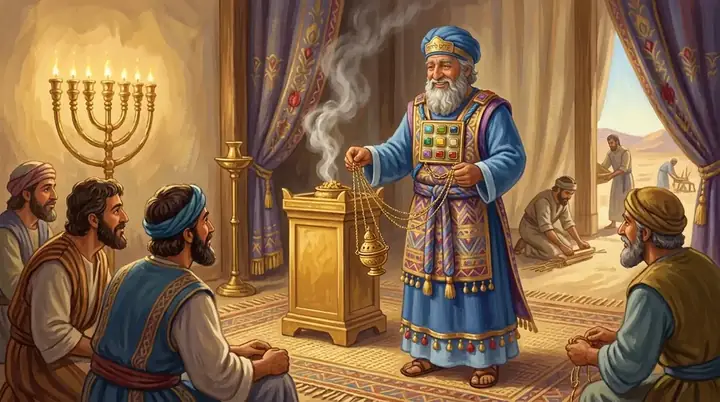
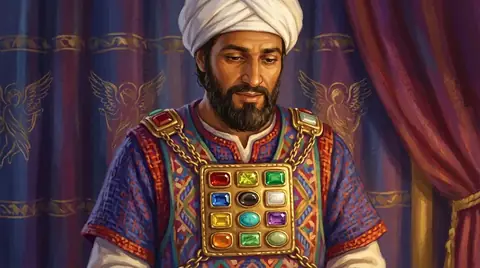
The breastplate worn by Aaron held twelve precious stones in four rows, each cut with the name of a tribe. The sixth stone, the last of the second row, is called "diamond" in the King James Bible (Exodus 28:18; Exodus 39:11). Old Jewish tradition gives it to Naphtali. The Hebrew name seems to come from a word for striking or hammering, so a very hard stone is meant; but true diamonds could not be engraved in those days, so most think it was another gem, perhaps a white jasper or an onyx. Ezekiel lists the same stone among the jewels of the king of Tyre (Ezekiel 28:13).
The pen of iron
Jeremiah uses a different word, shamir, when he says that Judah's sin is written "with a pen of iron, and with the point of a diamond" on the tablet of their hearts (Jeremiah 17:1). This is the hard stone also called adamant: a cutting point used by engravers. The lesson is sobering. Sin had been scratched deep and would not rub off; only God could give a new heart (Jeremiah 31:33).
Key verses
- Exodus 28:18
And the second row shall be an emerald, a sapphire, and a diamond.
- Jeremiah 17:1
The sin of Judah is written with a pen of iron, and with the point of a diamond: it is graven upon the table of their heart, and upon the horns of your altars;
- Ezekiel 28:13
Thou hast been in Eden the garden of God; every precious stone was thy covering, the sardius, topaz, and the diamond, the beryl, the onyx, and the jasper, the sapphire, the emerald, and the carbuncle, and gold: the workmanship of thy tabrets and of thy pipes was prepared in thee in the day that thou wast created.
Read next
 ThingBreastplateArmour that covered a soldier's chest, and the KJV's name for the high priest's jewelled breastpiece. Paul tells…
 PersonAaronMoses' older brother and Israel's first high priest. He spoke for Moses before Pharaoh and served God at the tabernacle…
 Person · TribeNaphtaliJacob's sixth son, born to Rachel's maid Bilhah, and the tribe that came from him, settled in the hills of northern…
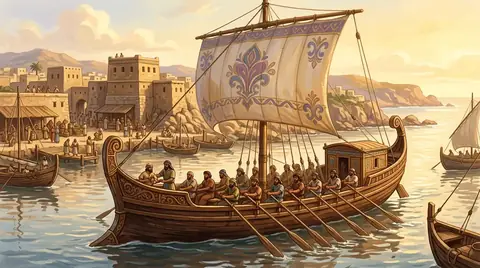 Place · CityTyreThe great trading port of Phoenicia, on the coast north of Israel. Its king Hiram helped build Solomon's temple; later…
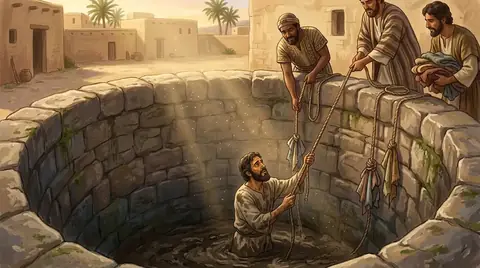 PersonJeremiahThe prophet who warned Judah for forty years that Babylon was coming, and wept as it came. He was beaten, put in the…Thing · StoneAdamantAn old word for the hardest stone known, harder than flint. The Bible uses it as a picture of a stubborn heart, and of…
Written for this app in its own words, from the Bible, with the facts checked against Bible dictionaries and encyclopedias: Easton's, Smith's, Fausset's, ISBE, Holman, the New Bible Dictionary, Vine's and the Thompson Chain topics.
