
Teaching
Crimination
also called Self-accusation
Accusing oneself: owning up to guilt with one's own mouth. Judah admitted Tamar was more righteous than he, Achan confessed what he had hidden, and the dying thief said he and his partner suffered justly.
Sometimes in the Bible a person condemns himself. Judah, faced with the pledge he had left with Tamar, said, "She hath been more righteous than I" (Genesis 38:26). Achan, found out by lot, confessed, "Indeed I have sinned against the LORD God of Israel" and told where the stolen silver and gold were hidden (Joshua 7:20–21). When Nathan told his story of the stolen lamb, David condemned the rich man, only to hear, "Thou art the man", and he answered, "I have sinned against the LORD" (2 Samuel 12:5–13). One of the thieves crucified with Jesus said, "we indeed justly; for we receive the due reward of our deeds" (Luke 23:41). Owning our guilt honestly is the first step to mercy: "If we confess our sins, he is faithful and just to forgive us" (1 John 1:9).
Key verses
- Genesis 38:26
And Judah acknowledged them, and said, She hath been more righteous than I; because that I gave her not to Shelah my son. And he knew her again no more.
- Joshua 7:20–21
And Achan answered Joshua, and said, Indeed I have sinned against the Lord God of Israel, and thus and thus have I done: When I saw among the spoils a goodly Babylonish garment, and two hundred shekels of silver, and a wedge of gold of fifty shekels weight, then I coveted them, and took them; and, behold, they are hid in the earth in the midst of my tent, and the silver under it.
- 2 Samuel 12:7–13
And Nathan said to David, Thou art the man. Thus saith the Lord God of Israel, I anointed thee king over Israel, and I delivered thee out of the hand of Saul; And I gave thee thy master’s house, and thy master’s wives into thy bosom, and gave thee the house of Israel and of Judah; and if that had been too little, I would moreover have given unto thee such and such things. Wherefore hast thou despised the commandment of the Lord, to do evil in his sight? thou hast killed Uriah the Hittite with the sword, and hast taken his wife to be thy wife, and hast slain him with the sword of the children of Ammon. …
- Luke 23:41
And we indeed justly; for we receive the due reward of our deeds: but this man hath done nothing amiss.
- 1 John 1:9
If we confess our sins, he is faithful and just to forgive us our sins, and to cleanse us from all unrighteousness.
Read next
 PersonJudahJacob's fourth son, who became leader among his brothers and the father of Israel's royal tribe. David, the kings of…
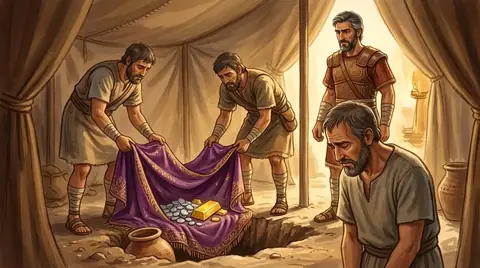 PersonAchanThe man who stole from Jericho's plunder, which God had set apart for himself. His hidden sin caused Israel's defeat at…
 PersonNathanThe prophet who told David that his son, not he, would build the temple, who confronted him over Bathsheba with the…
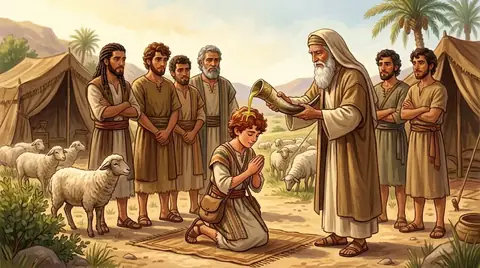 Person · KingDavidThe shepherd boy who killed Goliath and became Israel's greatest king, "a man after God's own heart". He wrote many…
Written for this app in its own words, from the Bible, with the facts checked against Bible dictionaries and encyclopedias: Easton's, Smith's, Fausset's, ISBE, Holman, the New Bible Dictionary, Vine's and the Thompson Chain topics.
