
Animal
Coney (rock badger)
KOH-neeHebrew shaphan · the rock hyrax
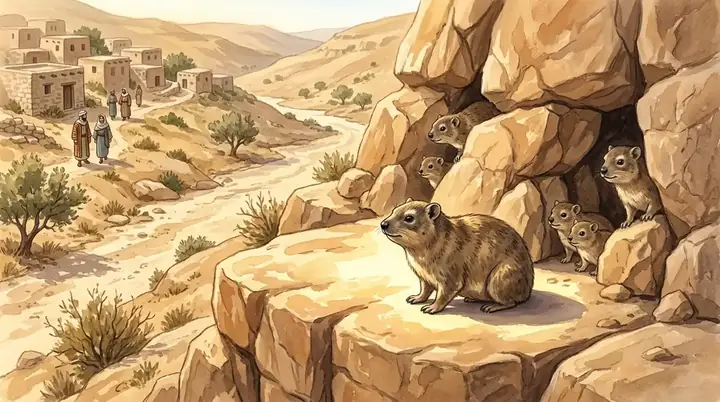
Not a rabbit at all but the hyrax, a plump furry creature of the cliffs and rocky hills. The law counted it unclean, and Proverbs praises its wisdom in hiding among the rocks.
- Hebrew
- shaphan, "the hider"
- Where
- Leviticus 11:5; Deuteronomy 14:7; Psalms 104:18; Proverbs 30:26
- Size
- About as big as a rabbit, with no tail
What it is
"Coney" is an old English word for rabbit, but the animal the Bible means is the hyrax: a plump, brown, tailless creature about the size of a rabbit, with short legs and rounded ears. Hyraxes live in colonies among boulders and cliffs, from the hills round the Dead Sea to the slopes of Sinai. They cannot dig, so they make their homes in cracks in the rock, and they post a lookout who whistles a warning when danger comes. The constant working of their jaws made them look as if they chewed the cud, and so the law lists them with the animals that chew the cud but do not divide the hoof, and forbids eating them (Leviticus 11:5; Deuteronomy 14:7).
In the Bible
The psalmist sees the hyrax as one of the creatures God has provided for: "the rocks for the conies" (Psalms 104:18). Proverbs names it among four small things that are "exceeding wise". Conies are weak and defenceless, "yet make they their houses in the rocks" (Proverbs 30:26). That is the lesson: those who know they are weak do well to shelter in a strong place, and the Bible's strong place is God himself, "the rock of my refuge" (Psalms 94:22).
Key verses
- Leviticus 11:5
And the coney, because he cheweth the cud, but divideth not the hoof; he is unclean unto you.
- Psalms 104:18
The high hills are a refuge for the wild goats; and the rocks for the conies.
- Proverbs 30:24–26
There be four things which are little upon the earth, but they are exceeding wise: The ants are a people not strong, yet they prepare their meat in the summer; The conies are but a feeble folk, yet make they their houses in the rocks;
Read next
Written for this app in its own words, from the Bible, with the facts checked against Bible dictionaries and encyclopedias: Easton's, Smith's, Fausset's, ISBE, Holman, the New Bible Dictionary, Vine's and the Thompson Chain topics. Also: Tristram, Natural History of the Bible.
