
Book
Catholic epistles
New Testament · also called the General Epistles · "catholic" means "universal"
The seven New Testament letters of James, Peter, John and Jude, called catholic or general because most were written to Christians at large rather than to one church or person.
- Books
- James, 1 and 2 Peter, 1, 2 and 3 John, Jude
- Also called
- The General Epistles
- Meaning
- Catholic: universal, for all
What they are
After Paul's letters and Hebrews come seven shorter letters by four writers: one by James, two by Peter, three by John and one by Jude. From early times they have been called the catholic epistles. Here "catholic" has nothing to do with the Roman church; it is the old word for "universal" or "general". The KJV titles show it: "The General Epistle of James", "The First Epistle General of Peter".
Why the name
Unlike most of Paul's letters, these were not sent to a single church. James writes "to the twelve tribes which are scattered abroad" (James 1:1), Peter to believers across five provinces (1 Peter 1:1), and Jude "to them that are sanctified by God the Father" (Jude 1:1). Second and Third John are the exceptions, written to a lady and to Gaius, but they were kept with John's first letter.
What they teach
Together they call believers to a faith that works, to hope under suffering, to love and truth, and to watchfulness against false teachers. They show the same gospel as Paul from the pens of other apostles and of the Lord's brothers.
Key verses
- James 1:1
James, a servant of God and of the Lord Jesus Christ, to the twelve tribes which are scattered abroad, greeting.
- 1 Peter 1:1
Peter, an apostle of Jesus Christ, to the strangers scattered throughout Pontus, Galatia, Cappadocia, Asia, and Bithynia,
- 2 Peter 1:1
Simon Peter, a servant and an apostle of Jesus Christ, to them that have obtained like precious faith with us through the righteousness of God and our Saviour Jesus Christ:
- 1 John 1:1–3
That which was from the beginning, which we have heard, which we have seen with our eyes, which we have looked upon, and our hands have handled, of the Word of life; (For the life was manifested, and we have seen it, and bear witness, and shew unto you that eternal life, which was with the Father, and was manifested unto us;) That which we have seen and heard declare we unto you, that ye also may have fellowship with us: and truly our fellowship is with the Father, and with his Son Jesus Christ.
- Jude 1:1
Jude, the servant of Jesus Christ, and brother of James, to them that are sanctified by God the Father, and preserved in Jesus Christ, and called:
Read next
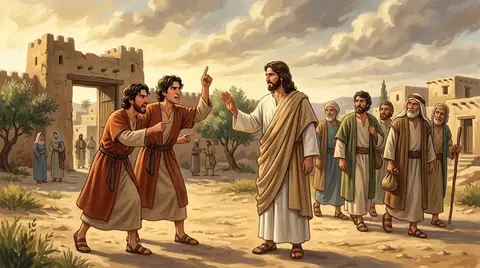 Person · ApostleJamesThe fisherman son of Zebedee, brother of John and one of Jesus' three closest disciples. Jesus called the brothers…
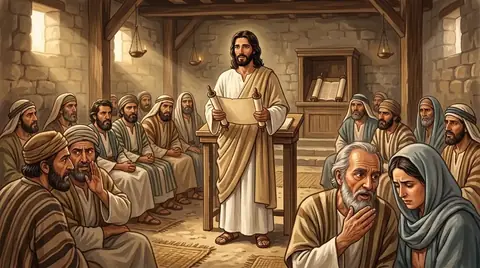 PersonJudeA brother of Jesus and of James, who wrote the short letter of Jude. At first he did not believe in Jesus, but later he…
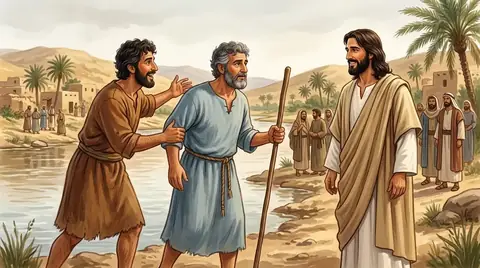 PersonPeterA Galilean fisherman who became the leader of the twelve apostles. Bold and impulsive, he confessed Jesus as the…
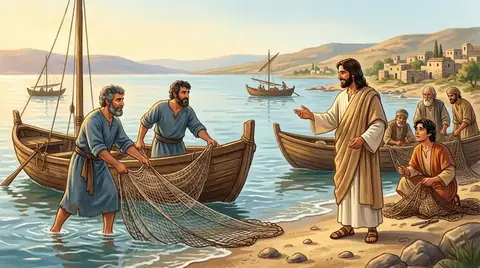 PersonJohnThe fisherman who became "the disciple whom Jesus loved". Youngest of the twelve, he stood at the cross, ran to the…
Written for this app in its own words, from the Bible, with the facts checked against Bible dictionaries and encyclopedias: Easton's, Smith's, Fausset's, ISBE, Holman, the New Bible Dictionary, Vine's and the Thompson Chain topics.
